

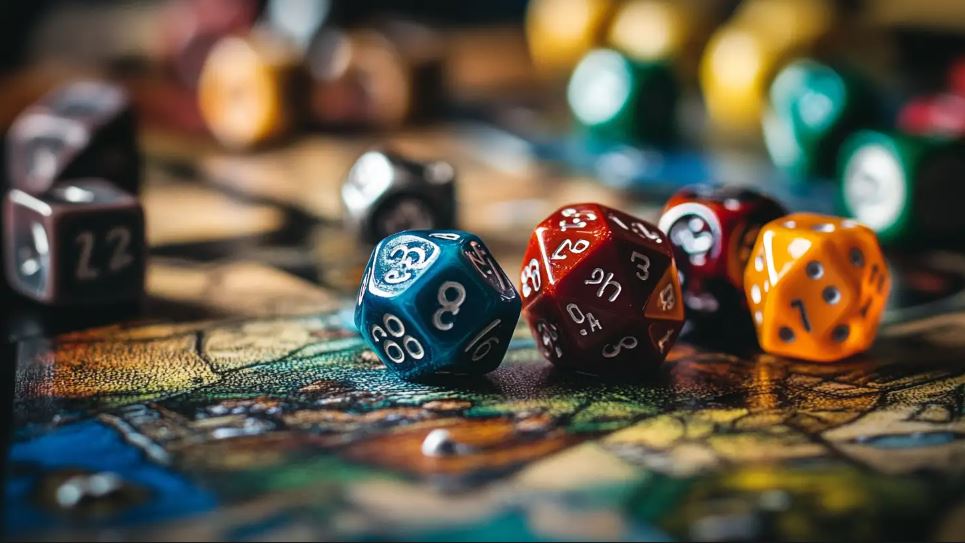
In the hallowed halls of academia, a revolution is quietly unfolding. It’s not led by stern professors in tweed jackets or bespectacled researchers hunched over microscopes. Instead, picture a group of students, eyes bright with excitement, huddled around a table covered in colorful game boards, cards, and dice. Welcome to the world of educational board games, where learning meets play in a dynamic fusion that’s reshaping how we think about education. If you want to play, go to wbetz.
From elementary school classrooms to university lecture halls, board games are making a comeback – not as mere entertainment, but as powerful tools for learning. Gone are the days when games were seen as frivolous distractions from “real” education. Today, educators are recognizing that the right game, in the right context, can be a gateway to deeper understanding, enhanced critical thinking, and improved social skills.
The Renaissance of Tabletop Learning
Remember when your teacher would wheel in the TV cart, and the whole class would perk up, knowing a change of pace was coming? That’s the kind of excitement that board games are now bringing to classrooms across the country. But unlike passive video watching, these games are actively engaging students in ways that traditional teaching methods often struggle to achieve.
Take “Pandemic,” a cooperative board game where players work together to save the world from outbreaks of deadly diseases. In Dr. Sarah Chen’s microbiology class at Westfield University, this game has become a semesterly tradition. “It’s not just about entertainment,” Dr. Chen explains, her eyes lighting up as she describes the game’s impact. “Students are applying concepts of epidemiology, making decisions based on limited resources, and experiencing firsthand how global health crises unfold. The discussions we have after each game session are incredibly rich and insightful.”
This scene is playing out in classrooms and lecture halls nationwide. History teachers are using “Diplomacy” to illustrate the complexities of international relations. Math classes are diving into probability theory with “Yahtzee.” Even literature professors are getting in on the action, using storytelling games like “Once Upon a Time” to explore narrative structure and character development.
More Than Just Fun and Games
But let’s be clear – this isn’t just about making learning “fun.” While engagement is certainly a benefit, the real power of educational board games lies in their ability to create immersive, experiential learning environments.
Dr. Marcus Whitman, an educational psychologist at the University of California, Berkeley, has been studying the impact of games in education for over a decade. “What we’re seeing is that well-designed educational games can create what we call ’embodied cognition’ – a state where abstract concepts become tangible and interactive,” he explains. “This leads to deeper understanding and better retention of information.”
Indeed, research is backing up what many educators have intuitively known for years. A 2023 study published in the Journal of Educational Psychology found that students who learned economic principles through board games scored an average of 12% higher on standardized tests compared to those taught through traditional methods alone.
But it’s not just about test scores. Board games are proving to be powerful tools for developing soft skills that are increasingly valued in the modern workplace. Collaboration, negotiation, strategic thinking, and adapting to changing circumstances – these are all skills that many board games naturally foster.
From Kindergarten to College: Games Across the Educational Spectrum
The beauty of educational board games lies in their versatility. At Washington Elementary in Seattle, first-grade teacher Ms. Applebaum uses a modified version of “Chutes and Ladders” to teach basic addition and subtraction. “The kids don’t even realize they’re doing math,” she chuckles. “They’re too busy having fun and trying to beat their classmates to the top of the board.”
Move up to middle school, and you might find students in Mr. Guzman’s social studies class engaged in a heated game of “Settlers of Catan.” But this isn’t just playtime – Mr. Guzman has adapted the game to teach concepts of resource management, trade, and early civilization development. “It’s amazing to see how quickly they grasp these complex ideas when they’re presented in a game format,” he says. “And the best part? They’re begging for more ‘homework’ so they can play again.”
In high schools, the games get even more sophisticated. At Brookline High in Massachusetts, the AP Biology class regularly breaks out “Evolution,” a game that simulates the adaptation and survival of species. “It’s one thing to read about natural selection in a textbook,” says Jenny, a senior in the class. “But when you’re actually playing as a species, trying to adapt and survive against your classmates’ species – that’s when it really clicks.”
And in universities, board games are finding their way into disciplines you might not expect. Law schools are using mock trial games to help students practice courtroom procedures. Business schools are incorporating complex economic simulations to teach market dynamics. Even medical schools are getting in on the action, with games designed to improve diagnostic skills and patient communication.
The Challenges of Game-Based Learning
Of course, integrating board games into education isn’t without its challenges. Time constraints, curriculum requirements, and budget limitations can all pose obstacles to widespread adoption. There’s also the question of assessment – how do you measure learning outcomes when the learning process looks more like play than traditional study?
Dr. Elena Rodriguez, an education policy researcher at Stanford University, acknowledges these challenges but remains optimistic. “Yes, there are hurdles,” she admits. “But the potential benefits are too significant to ignore. We need to be rethinking our entire approach to assessment and curriculum design to incorporate these powerful learning tools.”
Some schools are already leading the way. The Greenwood Academy in Portland, Oregon, has implemented a “Games Day” once a month, where the entire curriculum is taught through various board and card games. “It was a bit chaotic at first,” admits Principal Tom Fredericks. “But now, it’s the day students look forward to most. And our test scores? They’ve never been higher.”
The Future of Play-Based Learning
As we look to the future, it’s clear that board games in education are more than just a passing fad. Game designers and educators are increasingly collaborating to create games specifically tailored for educational outcomes. Major publishers are developing “classroom editions” of popular games, complete with lesson plans and assessment tools.
Technology is also playing a role in this board game renaissance. Digital versions of educational board games are making it possible for students to continue their play-based learning at home or on the go. Augmented reality is being incorporated into some games, blending the tactile experience of traditional board games with the interactive possibilities of digital technology.
But perhaps the most exciting development is the way board games are breaking down the walls between different subjects. “In the real world, problems don’t come neatly packaged into ‘math’ or ‘history’ or ‘science,'” points out Dr. Whitman. “The best educational games reflect this reality, requiring students to draw on knowledge and skills from multiple disciplines to succeed.”
Rolling the Dice on the Future of Education
As we stand on the brink of this educational revolution, it’s worth remembering that play has always been a fundamental part of how humans learn. From the earliest childhood games to the complex simulations used in professional training, games have the power to engage our minds and challenge our thinking in unique ways.
By bringing board games into our schools and universities, we’re not just making learning more enjoyable – we’re preparing students for a world that increasingly values creativity, adaptability, and collaborative problem-solving. We’re teaching them that learning doesn’t have to be a solitary, passive experience, but can be a dynamic, social adventure.
So the next time you pass a classroom and hear the rattle of dice or the shuffle of cards, don’t assume the teacher has given up and let the kids run wild. Chances are, you’re witnessing the future of education in action. It’s a future where learning is active, engaging, and yes, even fun. And in this game of education, everyone has the chance to be a winner.
As we close the board on this exploration of games in education, one thing is clear: the dice have been rolled, and the move towards more play-based learning is well underway. In classrooms across the country, students and teachers alike are discovering that when it comes to education, sometimes the best way to move forward is to pass “Go,” collect some knowledge, and keep on playing.
