

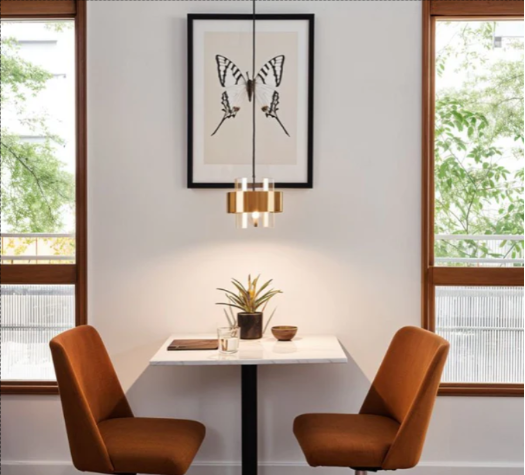
Changing your light fixtures is the quickest way to update the look of a room. Add personality with new wall lights or create a sleek, streamlined look with an exposed chandelier. Many fixtures come with assembly instructions, but installation can be the trickiest part. But this step-by-step guide will help you navigate the process with ease.
Here is how to Change Light Fixtures
Before you begin, place all the parts included in the fixture, read the instructions thoroughly, and make sure you have all the tools needed for installation.
Power off
Before installing a light fixture, locate your home’s circuit panel. Turn off power to the circuit where the fixture is located. If necessary, use a voltage tester to verify that electricity is no longer flowing.
If you are having trouble locating the circuits, turn the fixture on and turn off each circuit until the fixture goes out. Once you find the appropriate circuit, label the circuit and turn off the wall switch. Do not restore power until installation is complete.
Remove decorative fixtures and Wiring
Remove the removable parts from the existing fixture. This may include light bulbs, glass light covers, or lampshades. Escorts, commonly called canopy pieces, cover exposed hardware on a ceiling or wall.
Next, you need to remove the plate to expose the wiring. Typically the plates are attached with screws. If the installed fixture is particularly heavy, ask a friend to help you.
Before disconnecting any wires, use a current detector to make sure there is no current flowing through the fixture. Existing fixtures must be connected using three wires: hot (black), neutral (white), and ground (copper). Separate each wire. Be sure to hold on to the retaining device while disconnecting the wires. Once all three wires are disconnected, they will fall.
Measure and Cut the Wire
For suspended ceiling-mounted light fixtures, such as pendant lights, vanity lights, and chandeliers, you’ll want to measure how low they will hang before installation. When placed on a table, 30 to 34 inches from the table top is a comfortable height for guests.
Now you need to cut and strip the wire. It’s best to leave an extra 8 to 10 inches in the length of the hanger so you can attach it later. Cut the wires and use wire strippers to remove 1 inch of coating from each wire.
Replace the hardware plate
Carefully review the instructions provided with your new light fixture. A hardware plate must be provided to replace the existing plate. Attach the new mounting bracket to the ceiling box, threading the wire through the new plate so it can be reconnected to the fixture.
Connect the wires
As with electrical boxes, fixtures should include one hot (black) wire, one neutral (white) wire, and one ground (copper) wire. Wiring a fixture is as simple as connecting black to black, white to white, and copper to copper. The wires in the fixture may already have the insulating coating stripped away, exposing the braided metal wire.
Once the wire is exposed, about half an inch, you are ready to move forward and connect. If not, use an electrician’s pliers to strip away about half an inch of insulation, exposing the metal wire. Once you have enough wire to work with, connect the two black wires first using the wire nuts provided.
If your fixture does not come with wire nuts, you can purchase some at your local hardware store. Next, connect the two white or neutral wires.
Each light socket in a new light fixture has its own set of wires. Each of these should be tied together inside the fixture and attached to a single wire.
Installation and Assembly
Slide the wires into the electrical box and assemble them according to fixture instructions. When you’re done, reinstall the bulb. We offer a variety of LED bulbs and smart bulbs to suit every lighting fixture. Enjoy the tailored comfort of our CYNC line or make the ultimate style statement with our vintage LED bulbs. Or, if you need a bulb with additional features, our LED+ line is the ideal lighting solution.
Turn on the electricity
The source is ready to power back on. Turn on the breaker and you’re done. Now that you’ve seen how easy it is to replace a light fixture, you’re probably looking forward to doing it in other rooms as well. Please be safe and turn off the power.
Frequently Asked Questions
Can I change the lighting fixtures myself?
It depends on your DIY experience, your home’s wiring, and your new light fixture. To complete the project faster, work with an assistant and use a ladder that includes a tray to hold all the parts you need.
Is it safe to change a light fixture if the switch is off?
Always turn off the light switch and disconnect power at the breaker before replacing a fixture. Use a non-contact voltage tester to verify that the power is off. You can wear a headlamp or use a work light to see what you are doing while the lights are off.
Do I need to cut a breaker to replace a light fixture?
Yes, you need to turn off the breaker. Don’t skip this step just to save time. Electric shock may occur.
