

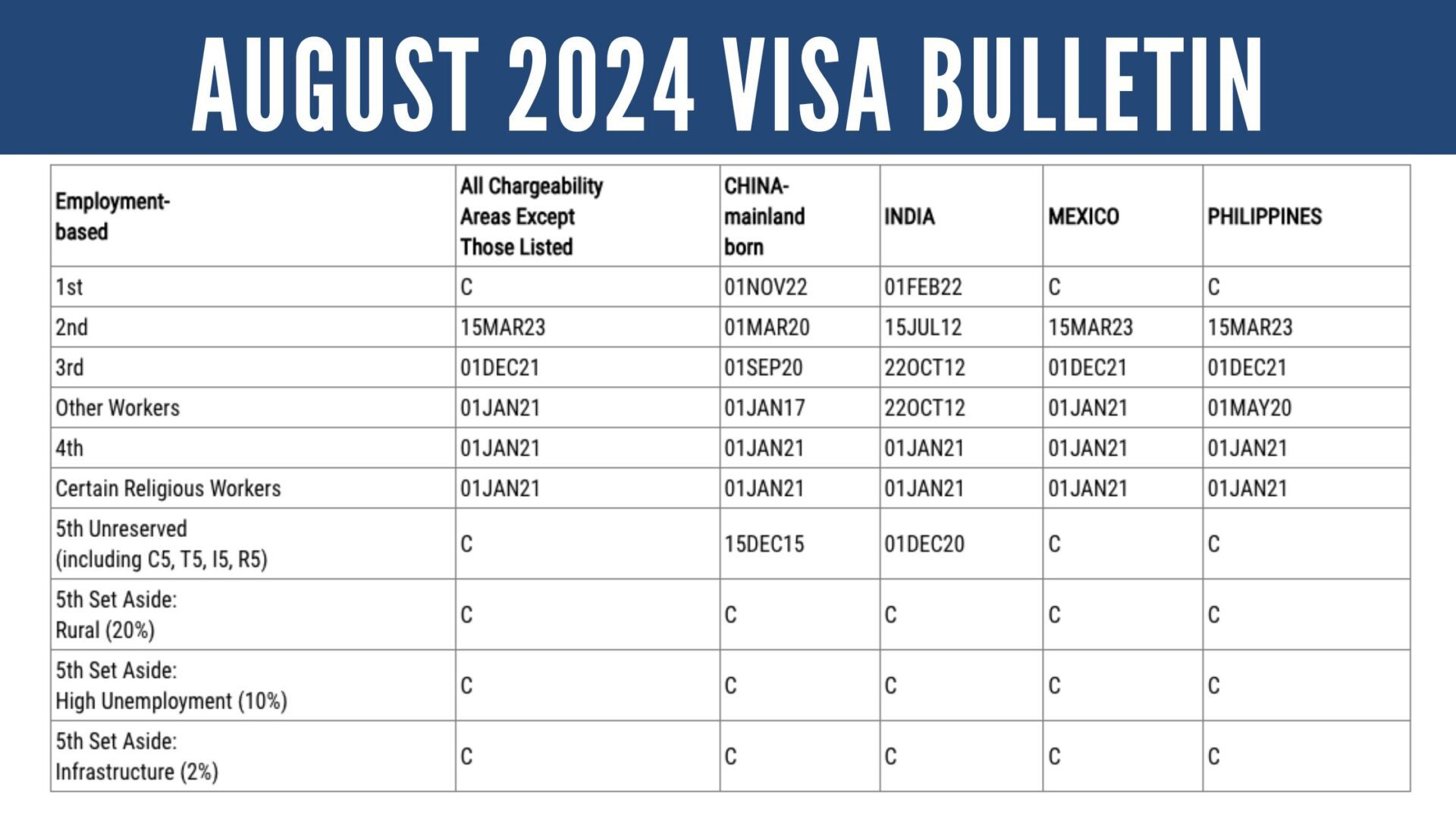
USCIS Visa Bulletin August 2024 provides important updates on the availability of immigrant visa numbers for various categories. It outlines the priority dates for family-sponsored and employment-based green card applicants.
This monthly publication from the U.S. Citizenship and Immigration Services (USCIS) is essential for individuals seeking to adjust their status or apply for permanent residency. It helps applicants understand their place in the visa process and estimate when they might be able to move forward with their applications.
Understanding the August 2024 Visa Bulletin

The August 2024 Visa Bulletin introduces key components such as priority dates and cutoff dates. A priority date is the date when an applicant’s petition is filed, establishing their place in line for a visa number.
Cutoff dates indicate the dates before which applications can be processed; if an applicant’s priority date is earlier than the cutoff date, they are eligible to proceed.
The bulletin is divided into two main charts:
- Final Action Dates: These dates signify when visas can be issued. Applicants with priority dates earlier than the listed dates are eligible for visa issuance.
- Dates for Filing Applications: These dates indicate when applicants can submit their visa applications to the National Visa Center, even if a visa number isn’t immediately available.
The distinction between these charts is crucial, as they guide applicants on when to file their applications and when to expect final decisions.
Key Updates in the August 2024 Visa Bulletin
The August 2024 Visa Bulletin presents several significant changes:
- Forward Movement: Certain categories have seen advancement in priority dates, allowing more applicants to become eligible for visa processing.
- Retrogression: Some categories have experienced a backward shift in priority dates, delaying visa availability for affected applicants.
- Visa Availability: The bulletin outlines the number of visas available for various categories, influencing the speed at which applications are processed.
These updates directly impact applicants’ timelines and strategies for proceeding with their immigration plans.
Family-Sponsored Preference Categories
Family-sponsored immigration is categorized into several preference levels:
- F1: Unmarried sons and daughters of U.S. citizens.
- F2A: Spouses and children of permanent residents.
- F2B: Unmarried sons and daughters (21 years of age or older) of permanent residents.
- F3: Married sons and daughters of U.S. citizens.
- F4: Brothers and sisters of adult U.S. citizens.
The August 2024 bulletin indicates changes in visa availability across these categories, affecting wait times and eligibility for applicants.
Employment-Based Preference Categories
Employment-based green cards are divided into five categories:
- EB-1: Priority workers (Extraordinary ability, Outstanding Professors, Multinational Managers)
- EB-2: Advanced degree holders & exceptional ability workers
- EB-3: Skilled workers, professionals, and other workers
- EB-4: Special immigrants (Religious workers, Afghan/Iraqi translators)
- EB-5: Immigrant investors
For August 2024:
- EB-1 remains current for most countries, but India & China face retrogression.
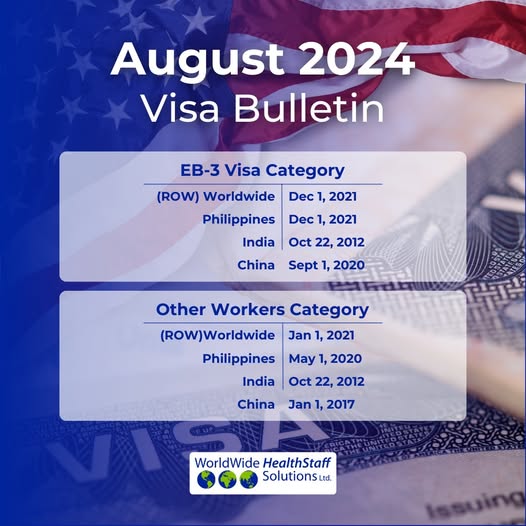
- EB-2 & EB-3 show slow movement due to high demand.
- EB-5 investor visas are seeing faster processing under specific programs.
Understanding these changes helps applicants determine the best time to file their applications.
Countries Affected by Visa Retrogression
Visa retrogression occurs when high demand exceeds the annual visa limit, causing delays.
Countries most affected in August 2024:
- India: Significant delays in EB-2 & EB-3 categories.
- China: Retrogression in EB-5 Investor Visa.
- Mexico & the Philippines: Slow movement in family-sponsored (F) visas.
If your category is retrogressed, you may need to wait until the next fiscal year for a visa number to become available.
Adjustment of Status and Visa Processing
If your priority date is current, you can proceed with Adjustment of Status (AOS) or Consular Processing.
Steps to take if your priority date is current:
- File Form I-485 (if adjusting status in the U.S.).
- Submit supporting documents like medical exams & affidavits.
- Prepare for a USCIS interview (if required).
- Wait for the final approval & green card issuance.
If your priority date is not yet current, you must wait for the next Visa Bulletin.
How to Check Your Priority Date
To check your priority date:
- Locate it on your I-797 Notice of Action (received after petition approval).
- Compare it with the cutoff dates listed in the latest Visa Bulletin.
- If your date is before the listed cutoff, you are eligible to proceed.
USCIS updates the Visa Bulletin on its official website every month.
Predictions for Future Visa Bulletins
Visa availability is influenced by demand, annual quotas, and country-specific limits.
Expected movements for the next few months:
- EB-2 and EB-3 categories may see slow advancements.
- Family-based categories could experience minor improvements.
- India & China may face continued retrogression due to high demand.
Applicants should stay updated and plan filings accordingly.
Impact on Green Card Holders and Applicants
Visa delays impact work permits, travel plans, and legal status.
If your priority date is not current:
- Consider renewing your work permit (EAD) or travel document (AP).
- Maintain valid non-immigrant status to stay legally in the U.S.
- Stay informed on future Visa Bulletin updates.
Applicants with current priority dates should file applications promptly to avoid delays.
FAQs About the August 2024 Visa Bulletin
Is USCIS Moving Faster in 2024?
In 2024, the U.S. Citizenship and Immigration Services (USCIS) made notable progress in reducing processing times across various applications. A fact sheet released in April 2024 highlighted significant improvements across a range of forms, reflecting the agency’s commitment to enhancing efficiency.
What is the F4 Category in the Visa Bulletin for August 2024?
The F4 category refers to the family-sponsored preference for brothers and sisters of adult U.S. citizens. As of the August 2024 Visa Bulletin, the Final Action Dates for F4 applicants vary by country, with some experiencing retrogression, leading to longer wait times.
What is the Priority Date in the Visa Bulletin?
A priority date is the date when an immigrant petition is filed with USCIS. It determines an applicant’s place in line for visa processing. The Visa Bulletin publishes cutoff dates; if an applicant’s priority date is earlier than the cutoff date, they are eligible to proceed with their application.
What is the Backlog Report for Visas in October 2024?
Specific backlog data for October 2024 is not available in the provided sources. However, visa backlogs fluctuate based on demand and processing capacity. Applicants should consult the latest Visa Bulletin and USCIS updates for current information.
How Long After Being Documentarily Qualified for an Interview in 2024?
Once deemed documentarily qualified, the wait time for an interview varies by visa category and embassy workload. Some applicants may wait several months before receiving an interview appointment.
How Long is the U Visa Processing Time in 2024?
U Visa processing times can be lengthy, often taking several years due to high demand and annual caps. Applicants should check USCIS processing times for the most current estimates.
How Long Does I-130 Take to Get Approved in 2024?
The processing time for Form I-130 varies based on the petitioner’s status and the beneficiary’s location. On average, it can take several months to over a year. USCIS provides updated processing times on their website.
How to Speed Up the U Visa Process?
Expediting a U Visa is challenging due to statutory limits. However, ensuring complete and accurate documentation can prevent delays. Consulting with an immigration attorney may provide additional guidance.
Conclusion on USCIS Visa Bulletin August 2024
The USCIS Visa Bulletin for August 2024 highlights crucial updates affecting both family-sponsored and employment-based applicants. Many categories have experienced visa retrogression, especially for high-demand countries like India, China, Mexico, and the Philippines.
Applicants in EB-2 and EB-3 categories face delays, while EB-1 remains current for most countries except India and China. Family-sponsored visas continue to see slow movement, with minor advancements in some preference categories.
For those with a current priority date, now is the time to file adjustment of status or consular processing. However, those affected by retrogression must wait for future visa availability.
