

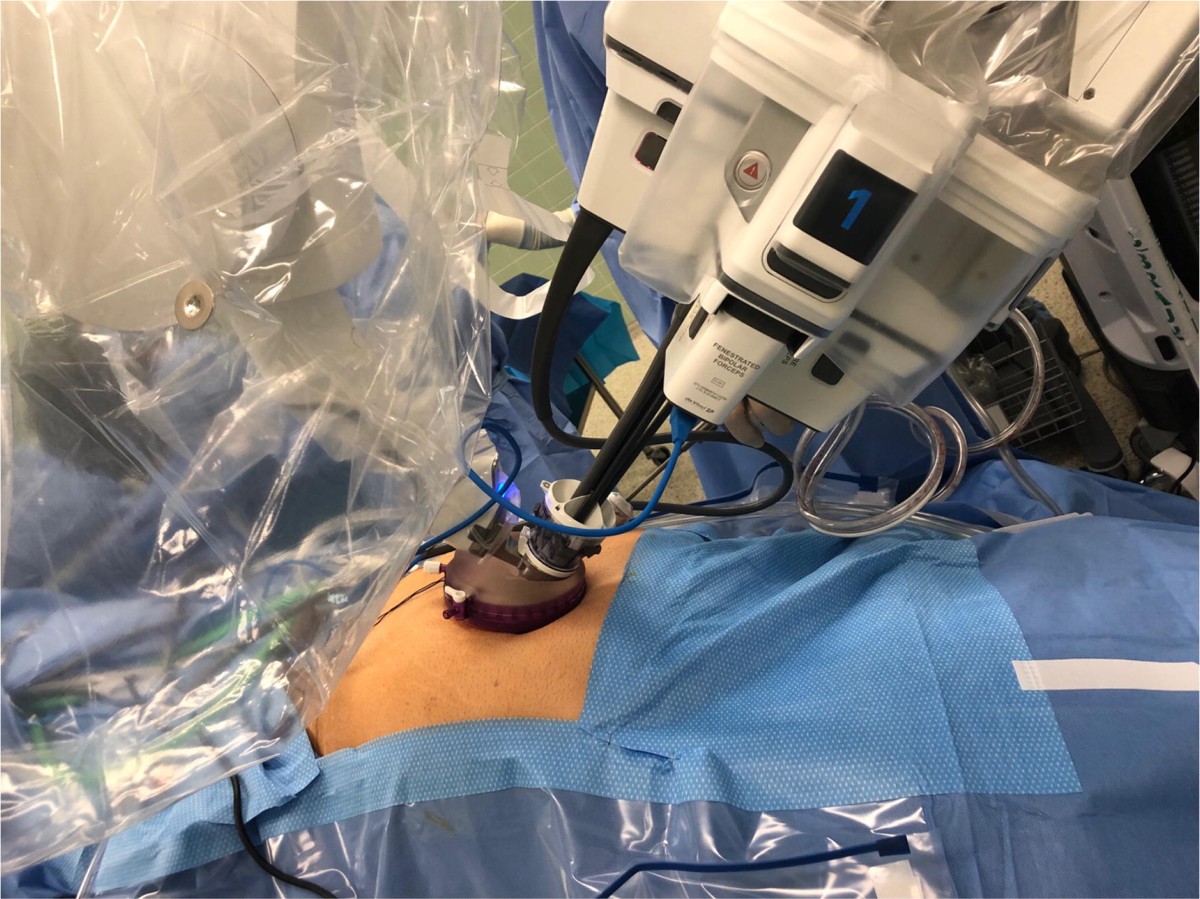
The trajectory of modern surgical intervention has consistently prioritized minimizing patient trauma while maximizing technical precision. Traditional open surgery, which requires large incisions to allow direct anatomical visualization and manual instrument manipulation, has largely been superseded by minimally invasive alternatives in many medical fields. While standard multi-port laparoscopy and early robotic systems marked a monumental shift forward, they still required several distinct incisions across a patient’s abdomen or chest. The introduction of the Da Vinci (Single Port) Robotic Surgery platform represents the next generation of this evolution, consolidating an entire surgical array into a single entry point.
Mechanical Engineering and Architectural Innovations
The technological core of the single-port system lies in its revolutionary delivery architecture. Unlike previous configurations where multiple independent robotic arms maneuvered from different angles, this system utilizes a single twenty-five-millimeter cannula. Through this single small tube, the platform deploys a high-definition three-dimensional camera alongside three fully articulated, instrumented arms.
The instruments themselves are engineered with multi-jointed, wristed capabilities that mimic and exceed the rotational capacity of the human hand. Once inside the surgical field, the instruments emerge from the cannula tip and deploy in a triangulation setup. This internal splitting allows the operating surgeon to maintain optimal mechanical leverage and tissue retraction without needing separate external incisions to achieve those angles. The camera is similarly flexible, offering regular and reverse-angle visualization to ensure that hidden anatomical structures can be safely evaluated.
Clinical Utility Across Specialized Fields
The architectural refinement of a single entry point makes this robotic system exceptionally well-suited for complex procedures confined to narrow, deep, or structurally crowded anatomical spaces.
Urological Interventions
In urology, the platform has transformed the approach to radical prostatectomies, partial nephrectomies, and reconstructive procedures of the urinary tract. The ability to access the prostate or kidneys through a single entry point—often extraperitoneally—means surgeons can completely avoid entering the peritoneal cavity. This minimizes bowel irritation, reduces the formation of postoperative adhesions, and significantly lowers the risk of internal scarring.
Head and Neck Oncological Procedures
Transoral robotic surgery represents another profound application of single-port technology. Accessing tumors at the base of the tongue, tonsils, or pharynx traditionally required highly morbid procedures, sometimes involving the splitting of the mandible. The specialized single-port cannula can navigate through the natural opening of the mouth, allowing for the precise resection of pharyngeal and laryngeal malignancies without visible external scars and with minimal disruption to swallowing and speech functions.
Advanced Gynecological Interventions
For complex gynecological pathologies, including deep infiltrating endometriosis and hysterectomies, the platform provides a highly localized approach. Surgeons can execute complex tissue dissections and precise suturing within the narrow confines of the pelvis, preserving delicate nerve pathways and vascular structures that are critical for long-term pelvic floor function.
Postoperative Pathways and Patient Outcomes
From a patient-centric perspective, the mitigation of surgical trauma translates directly into accelerated recovery metrics. Every additional incision required by traditional methods introduces another site for potential wound complications, localized infection, or incisional hernias. By confining the entire operative footprint to one small point, the physiological stress response of the body is substantially mitigated.
Patients undergoing single-port procedures frequently exhibit lower postoperative pain scores, thereby reducing the systemic requirement for narcotic analgesics. This reduction in opioid dependency accelerates gastrointestinal recovery and allows for earlier mobilization. Consequently, hospital stay durations are significantly curtailed, with many individuals qualifying for same-day discharge or safe transitions to home care within twenty-four hours of major abdominal or pelvic surgery. High-tier institutions globally, including Liv Hospital, integrate these sophisticated protocols into their surgical workflows to optimize long-term recovery and aesthetic outcomes.
Technical Execution and Control Mechanics
The control interface preserves the intuitive master-slave translation architecture that defines modern robotic platforms. The operating surgeon remains seated at a separate ergonomic console, fully detached from the physical patient table. The system continuously translates the surgeon’s hand, wrist, and finger movements into real-time micro-movements of the internal instruments.
Built-in software algorithms actively filter out microscopic physiological tremors, ensuring that every suture placed and tissue plane dissected is executed with flawless stability. The immersive console environment provides visual magnification up to ten times, allowing the operating team to distinguish subtle boundaries between healthy tissue and malignant margins. This high-fidelity visualization, paired with fluid mechanical articulation, establishes a safer profile for preserving critical blood vessels and peripheral nerves adjacent to the primary operative zone.
