

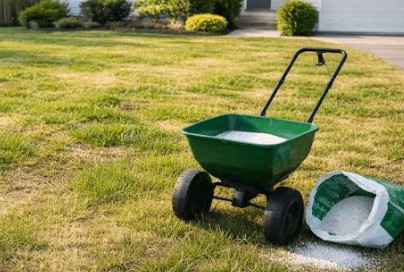
Buying a heavier bag is the wrong answer to a thin lawn, and it is the one almost everybody reaches for. Homeowners here have been sold the same four step retail program for a decade, which is why so many of them eventually go looking for lawn care services fairfield ct after a fourth straight season of pale grass, dark green spreader stripes and clover filling the gaps. The argument of this checklist is short: fertilizer only works when the amount is matched to what the soil is actually short of, and a store program cannot do that, because it never measured anything. Take a 6,000 square foot front lawn on the sandy coastal soil common near the Sound, with a fresh test result on the kitchen counter. Run the four checks below in order.
Check The Soil Test Before Buying Anything
Start with the results, not the store. A test reports pH, organic matter, and how much phosphorus and potassium are already sitting in the root zone waiting to be used. Sandy soil along the coast leaches nutrients quickly and often reads low on potassium while pH drifts below 6.0, which locks up nitrogen the grass then cannot reach. The lawn we see most often is not underfed at all; it has been fed the wrong thing at the wrong pH, year after year, with more of it each spring. That is how a bag with an aggressive nitrogen number greens a yard for ten days and leaves it thinner in August than it was in June. Circle the two numbers on your report that sit furthest from their target range. Every other item on this list is downstream of those two.
Check The Spreader Math Against Your Square Footage
Most burn stripes are arithmetic, not bad luck. Say the bag weighs 50 pounds, is labeled for 15,000 square feet, and the analysis on the front reads 24 percent nitrogen, which puts 12 pounds of actual nitrogen inside it. Empty that whole bag onto a 6,000 square foot front lawn, because that is what was in the garage and it seemed a shame to store half of it, and the pass works out to 2 pounds of nitrogen per 1,000 square feet, roughly double what a cool season lawn wants at one feeding. Overlap your wheel tracks by a foot the way most people do on a rectangular lawn, and the doubled strips land near 4 pounds per 1,000. There is your stripe, drawn in nitrogen.
Almost nobody knows their real turf area. Pace the perimeter, or open Google Earth Pro, which is free, and drag its polygon measure tool around the grass only, leaving out the driveway and the beds. Then calibrate the spreader on a tarp before the first pass rather than trusting the setting stamped on the bag, since that setting assumes a walking pace you probably do not walk. One measurement fixes every application after it.
Check What Each Season Actually Needs
The four step box was printed long before it reached your garage, and its schedule is an average of everywhere. The University of Connecticut Soil Nutrient Analysis Laboratory recommends testing every 3 to 5 years for most lawn situations, and that guidance was still current in July 2026, so one inexpensive test steers three or four seasons of decisions rather than a single Saturday. Spring feeding should push growth without forcing it. On sandy coastal soil in midsummer, restraint and water beat food, because heat stressed turf that gets pushed hard is turf you will be reseeding in September. The largest gain of the year is the late fall application, when roots quietly bank what they will spend next May. I could go on about mowing height, since a lawn scalped to two inches in July undoes a good share of whatever fertilizer buys, but that belongs on a different checklist. Feed the season you are standing in.
Check Results On A Realistic Clock
A corrected program looks slow at the start, and that is the point where people quit and go back to the bag. Through the first week you will see almost nothing above ground, because the pH correction is working below it. By week three the color evens out and the stripes stop advancing, though they do not vanish. Month three is when density changes: new tillers close the thin spots, and weeds find less bare soil to germinate in. Within 90 days, a 6,000 square foot lawn that tested poor in spring usually reads as a different property, and the weeds still standing are few enough to name.
None of this needs a lab coat, and none of it needs a bigger bag. It needs your numbers, applied in the order above, which is the entire difference between a program and a purchase. If you would rather hand the measuring and the timing to somebody else, and plenty of people reasonably would, then when you compare lawn care services Fairfield CT companies advertise, lead with one question: does the program start with a soil test, or with the same blend poured on every street? The bag is not the answer. The soil report is.
