

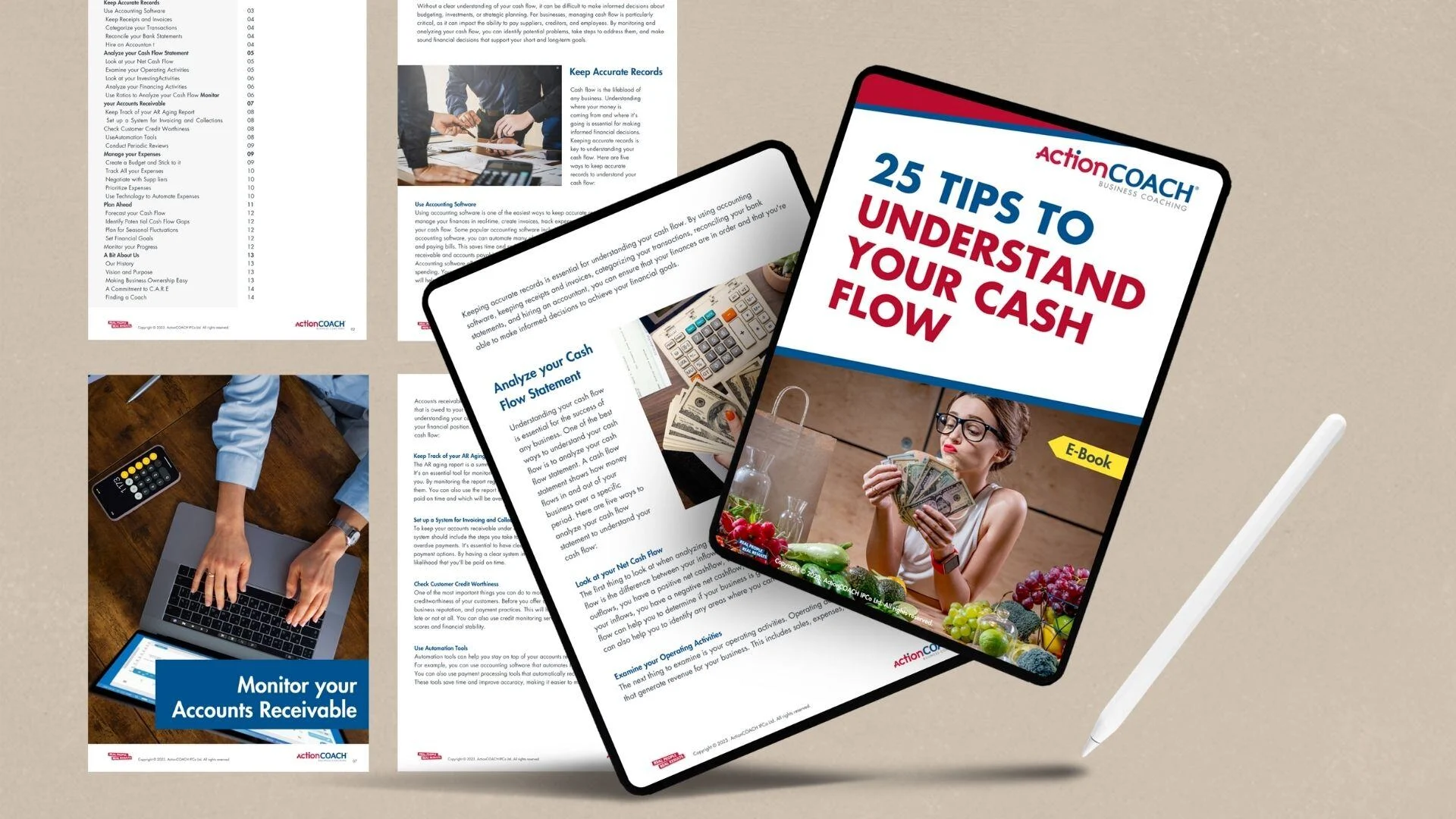
Cash flow is one of those topics that everyone talks about, but not everyone truly understands. Most business owners know the feeling: you’re busy, invoices are going out, the work is real… yet the bank balance still makes you nervous.
And the frustrating part is this: you can be profitable and still struggle for cash.
That’s why cash flow problems often feel confusing. They’re not always caused by low sales or poor pricing. More often, they’re caused by timing. Money comes in later than you’d like, while bills arrive right on schedule. Here’s the good news: you don’t need complicated forecasting software to get control. You already have a powerful tool for improving cash flow – and it’s sitting in your accounts.
It’s your balance sheet.
And if you understand your balance sheet, you’ll pick up the signs that it’s giving you. You can then spot cash risks early, tighten up weak points, and make more confident decisions long before things get uncomfortable.
Let’s walk through how to do that in plain English.
Why the Balance Sheet Helps With Cash Flow
Your profit and loss report tells you how the business performed over a period of time. It’s useful – but it doesn’t show cash timing very well.
The balance sheet is different. It shows what’s true right now.
It tells you:
- how much cash you actually have
- how much money customers owe you
- how much stock your cash is tied up in
- what bills and taxes are due soon
- what debt commitments you’re carrying
In other words, it shows the real conditions the business is operating under.
When people say “cash flow is about survival”, this is what they mean. The balance sheet highlights survival issues clearly — if you know where to look.
Find the cash pressure points
A business usually feels cash pressure in one of three places:
- too much money stuck in unpaid invoices
- too much money tied up in stock or projects
- too many bills landing at once (tax, suppliers, debt repayments)
Your balance sheet shows all three. The trick is to stop reading it like an accountant and start reading it like a business owner!
So let’s see how.
Step 1: Look at Cash First (Not Last)
On most balance sheets, cash is near the top of the assets section: “cash at bank”, “bank balance”, or similar. This is your most important number because it has no “maybe” attached to it. It’s not a future promise. It’s not dependent on customer behaviour. It’s simply what you have available.
A useful habit is to compare your cash balance to your outgoing commitments for the next month.
Even if you don’t do anything fancy, just ask:
If sales stopped for 30 days, would we be fine?
That one question often changes how business owners view their position!
Scenario: The “busy but broke” trap
Imagine a small marketing agency. They’re doing well. The owner is working long days and new clients are coming in. Revenue is up.
But on the balance sheet, the cash number is low. The reason becomes obvious: clients are paying on 60-day terms, while staff wages and software subscriptions go out monthly.
Nothing is “wrong” with the business in terms of sales — but cash timing is dangerous. If one client pays late, the agency suddenly feels the squeeze.
The balance sheet catches this problem early, before it becomes a crisis.
Step 2: Audit Your Accounts Receivable (Debtors)
Accounts receivable is the amount customers owe you. It appears as an asset, because it’s money that should arrive.
But here’s the truth: not all receivables are equal.
Some invoices are essentially cash waiting to land in the bank. Others are wishful thinking.
When receivables grow faster than cash, it’s a warning sign that the business is financing its customers.
A strong cash flow business usually has one (or both) of these:
- customers pay quickly
- the business enforces payment discipline
So when you look at receivables, don’t only look at the total. Ask:
- Is this number rising month on month?
- How old are these invoices?
- Are a few customers responsible for most of it?
Even a “healthy” business can become fragile if one large client owes a big chunk of the receivables.
A practical improvement
If your receivables are consistently high, improving cash flow might not require more customers at all. It might just require faster payment cycles.
Often the best wins come from small changes:
- deposits upfront
- staged payments on larger work
- switching to shorter terms (e.g. 30 days → 14 days)
- making it easy to pay immediately (bank transfer details clearly shown, card payment links, etc.)
The balance sheet tells you whether those changes are needed — and whether they’re working.
Step 3: Check Inventory and “Other Current Assets”
Inventory (or stock) is another common cash flow problem hiding in plain sight.
Because it’s listed as an asset, it can feel positive — but stock is only useful when it sells. Until then, it’s cash that’s been converted into boxes sitting on shelves.
If inventory is increasing while cash is tight, you may have a classic cash flow pattern:
The business keeps buying stock to be ready for sales, but sales don’t convert to cash fast enough.
This doesn’t just affect retail. It happens in trades and project businesses too, where “work in progress” behaves like inventory. If money is tied up in ongoing jobs, cash can feel permanently behind. This is where balance sheets get very revealing. You can actually see cash being “stored” in other forms.
Step 4: Study Your Current Liabilities Like a Threat List
Current liabilities are the bills that will need paying soon (usually within 12 months). This includes supplier bills, VAT, payroll liabilities, and short-term loan payments.
Current liabilities should make you alert — not fearful — because they help you plan properly.
A common mistake is treating VAT, for example, as “future money” until it’s due. Then it hits the business like a surprise bill.
A balance sheet doesn’t let you pretend. It shows what you owe. And once you know what’s coming, you can prevent pain.
This is why strong businesses build routines around it, such as setting aside VAT weekly, or keeping a buffer equal to a month of key expenses.
The Three Survival Metrics You Should Know
You don’t need a spreadsheet obsession to use balance sheet metrics. Two or three simple calculations can give you clarity quickly.
Working capital: “Can we survive the next phase?”
Working capital is: current assets – current liabilities
If it’s positive, you have some breathing room. If it’s negative, you’re operating under pressure, depending on fast inflows and smooth timing.
Negative working capital isn’t always fatal, but it makes the business vulnerable. Late payments or unexpected bills can tip you into stress very quickly.
Current ratio: “How tight is it?”
Current ratio is: current assets ÷ current liabilities
A number above 1 suggests you can cover near-term obligations. But always interpret it carefully — because receivables and inventory aren’t as liquid as cash.
A current ratio that depends heavily on unpaid invoices is far weaker than one supported by cash.
Quick ratio: “What if we ignore stock?”
This one is less commonly used by business owners, but it’s incredibly useful.
Quick ratio is: (current assets – inventory) ÷ current liabilities
And it answers a sharper question:
Can you pay bills without needing to sell stock first?
If your cash flow is shaky, this metric often reveals why.
How to Turn Balance Sheet Insight Into Cash Flow Action
Once you’ve identified the weak spot, the right response becomes clearer.
If receivables are high:
- tighten payment terms
- request deposits
- chase older invoices sooner
- reduce dependency on one slow-paying client
If inventory/work in progress is high:
- reduce stock levels
- stop over-ordering “just in case”
- improve turnaround time on projects
- invoice earlier or in stages
If current liabilities are high:
- negotiate supplier terms
- spread payment dates
- plan VAT and tax proactively
- refinance short-term pressure into longer-term stability (carefully)
This is where the balance sheet becomes more than a report. It becomes a decision tool.
Final Thought: Cash Flow is a System, Not a Feeling
Most business owners don’t run out of cash because they’re lazy or careless. They run out of cash because the business system creates cash timing gaps.
The balance sheet shows you those gaps — clearly. It highlights the exact places where money is getting stuck, the obligations that are building up, and the pressure that’s forming before it shows up in your bank balance.
When you learn to use it properly, you stop reacting to cash flow problems after they happen. You start preventing them.
And that’s the difference between a business that’s constantly firefighting… and a business that’s built for long-term success.
