

Introduction
Today’s housing market presents unique challenges for buyers, from rising home prices to fluctuating mortgage rates. While traditional financing options remain popular, they don’t always fit every homebuyer’s needs or financial profile. Fortunately, innovative solutions are helping open doors for more people looking to purchase a home, often with the guidance of professionals like the El Segundo CA real estate team Convoy Home Loans. These creative financing paths can mean the difference between waiting for years and moving into your new home sooner.
Whether you’re a first-time buyer struggling with a down payment, someone with unique income streams, or simply seeking to save on interest, knowing all your options is vital. Creative financing strategies can help bridge the gap between what you have and need, while offering competitive advantages in a hot real estate market. Exploring these choices gives buyers of all kinds a way to compete and often win in today’s housing landscape.
Innovative financing can help buyers strategize around limited inventory, increasing prices, or credit challenges. It is essential to work hand-in-hand with real estate experts who understand how to navigate these options, identify potential pitfalls, and match you with the programs best suited to your circumstances.
In addition, familiarity with these tools may even give buyers a leg up in negotiations, especially as more sellers become aware and open to alternative arrangements that keep transactions moving smoothly.
Assumable Mortgages
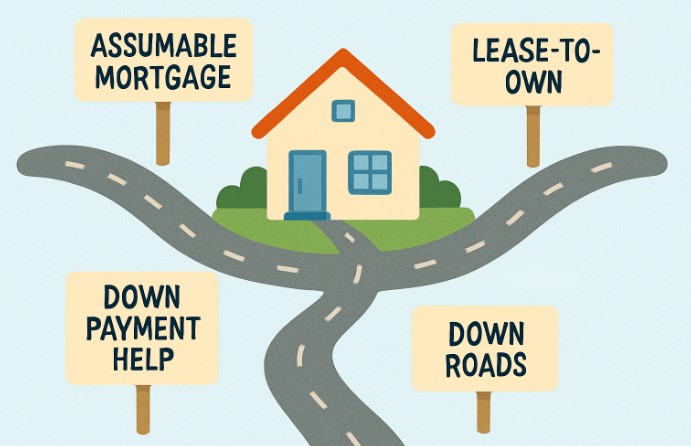
An assumable mortgage is a financing option where a buyer can take over a seller’s existing mortgage, keeping its current interest rate and payment terms. This is especially attractive in times of rising rates, when existing loans may be significantly lower-cost than new mortgages. Not every mortgage is assumable—government-backed loans like FHA, VA, and USDA often qualify—so buyers need to verify with the seller’s lender and be ready to meet eligibility requirements. Assumable mortgages often require less paperwork, potentially lower closing costs, and can make an offer on a home stand out.
Lease-to-Own Agreements
Lease-to-own, or rent-to-own, arrangements give buyers a unique pathway to homeownership. With this agreement, you rent the property with the option to purchase later, often locking in a price ahead of time. Typically, a portion of each month’s rent goes toward your eventual down payment. This is ideal for buyers who need time to strengthen their credit or save additional funds. If market prices rise quickly, you may benefit from your negotiated sale price, although it’s important to clarify all terms before signing.
Down Payment Assistance Programs
Saving for a down payment is one of the most common hurdles for prospective homebuyers. To address this, federal, state, and local agencies and some nonprofit organizations offer down payment assistance programs. These can provide grants, forgivable loans, or deferred payment loans to help cover down payments and closing costs. Especially for first-time buyers or those with moderate incomes, these programs could turn homeownership into a reality much sooner. For updated details on these solutions, see coverage from The New York Times.
Piggyback Loans
Piggyback loans are a creative way to structure your financing to avoid private mortgage insurance (PMI) and minimize your cash outlay. The most common arrangement is the 80-10-10 loan, where a buyer obtains two mortgages: one for 80% of the price, another for 10%, and then pays 10% down. While the secondary loan usually has a higher rate, this can often be offset by the savings on PMI, especially for buyers seeking more expensive homes that may otherwise require a jumbo loan.
Shared equity agreements involve a third-party investor contributing to the down payment in exchange for a percentage of any future appreciation in the home’s value. Buyers benefit by bringing less cash to the table and avoiding extra debt or higher payments, while investors receive a potential return when the property sells or is refinanced. It’s wise to review agreement terms carefully—some programs take a set portion of price gains, while others may include additional fees. Forbes has a helpful overview of shared equity arrangements and how they impact buyers nationwide.
Seller Financing
Seller financing cuts out the bank by allowing the buyer to purchase a home directly from the seller using mutually agreed-upon terms. This can be ideal for those who don’t qualify for traditional loans or need more flexibility regarding credit or income verification. A real estate attorney should always review the purchase agreement to ensure both parties are fully protected and the terms are clear, as missed details can cause complications later.
Non-Traditional Loan Programs
For buyers whose earning or banking situations don’t fit conventional guidelines, alternative mortgage products such as bank statement loans (for self-employed individuals), DSCR loans (for investment properties), or high-balance and jumbo loans are available. These products may consider alternative income documentation and not use the same debt-to-income rules, offering more flexibility but sometimes at higher costs. Always compare the terms and potential rate differences before proceeding.
Renovation Loans
With low housing inventory, more buyers are considering fixer-uppers. Renovation loans let you finance the purchase price and the cost of repairs or upgrades in a single mortgage. FHA 203(k) and Fannie Mae HomeStyle loans are among the most popular choices, each with eligibility and project requirements. These loans can open hundreds of extra homes and allow buyers to tailor a property to their needs and tastes.
These financing options are helping today’s buyers overcome obstacles and compete successfully, even in competitive or high-priced markets. By partnering with experienced real estate professionals, buyers can weigh the pros and cons of each strategy, ensuring their path to homeownership is secure and well-informed.
