

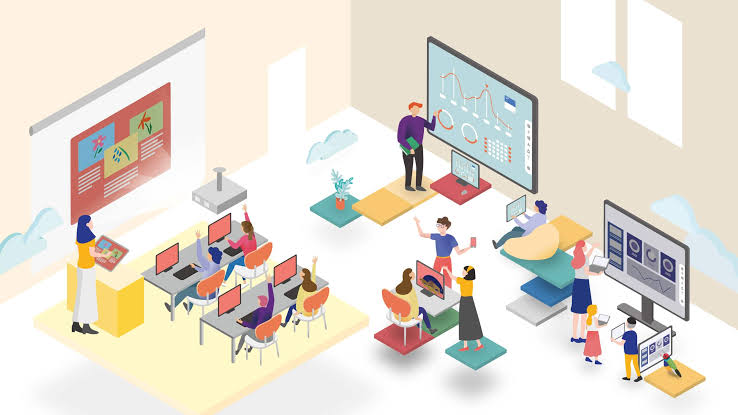
What would happen if your students could access educational content anytime, anywhere, without being confined to textbooks or classroom walls? Technology has fundamentally changed how we approach teaching and learning, yet many educators still struggle to integrate digital tools effectively into their daily instruction. The right technological solutions can transform not just how information is delivered, but how students engage with material, collaborate with peers, and develop critical thinking skills. This article explores practical, classroom-tested approaches to leveraging technology for genuine educational innovation.
1. Interactive Learning Platforms and Virtual Classrooms
Interactive learning platforms have become essential tools for delivering dynamic, personalized education. These systems allow teachers to create engaging lessons that combine video, text, quizzes, and interactive elements all in one digital space. Students benefit from immediate feedback on their work, which helps them identify misconceptions in real time rather than waiting days for graded assignments. For example, a history teacher might use an interactive platform to present a primary source document alongside guided questions that students answer at their own pace, fostering deeper analysis than traditional lecture formats. These platforms also generate valuable data about student progress, helping teachers pinpoint which concepts need reteaching before moving forward. The flexibility of virtual classrooms means students can revisit difficult material multiple times without pressure, reducing anxiety around learning and increasing retention.
2. Collaborative Tools for Group Work and Communication
Technology enables seamless collaboration regardless of physical location, allowing students to work together on projects in ways that would be impossible in a traditional classroom setting. Digital collaboration tools let students contribute simultaneously to shared documents, presentations, and brainstorming sessions, with all changes saved and visible to team members instantly. This approach mirrors real-world workplace dynamics where remote teamwork is increasingly common, giving students valuable experience with professional communication platforms. For instance, students studying environmental science might collaborate on a shared research document where one student gathers data, another analyzes findings, and a third creates visualizations, all working in parallel. Teachers can monitor collaboration progress in real time and provide feedback to teams before projects are completed. These tools also create a permanent record of who contributed what, making group accountability more transparent and fair.
3. Multimedia Content Creation and Presentation Tools
Rather than having students passively consume information, multimedia tools empower them to become creators who synthesize and present knowledge in innovative formats. Video editing software, podcasting platforms, and digital presentation tools allow students to demonstrate understanding through the medium that best fits their topic and learning style. A literature class might have students create short video essays analyzing themes in novels, while a physics class could use animation software to illustrate complex concepts like molecular motion. This approach engages multiple learning modalities simultaneously and requires deeper processing of information than traditional written essays alone. Students also develop technical skills that are increasingly valuable in higher education and professional environments. The creative aspect of multimedia projects often increases student motivation because they see their work as meaningful communication rather than mere assignment completion.
4. Adaptive Learning Software and Personalized Instruction
Adaptive learning systems use algorithms to adjust difficulty levels and content based on each student’s performance and learning pace, creating truly personalized educational pathways. Unlike one-size-fits-all instruction, these tools recognize when a student has mastered a concept and automatically advance them to new material, while providing additional practice and scaffolding for struggling learners. This differentiation happens automatically and at scale, freeing teachers from the impossible task of individually customizing instruction for thirty students with vastly different needs. For example, a math student who quickly grasps multiplication concepts can progress to division and fractions while classmates still practice fundamentals, without that student feeling bored or the struggling students feeling left behind. Teachers who manage these personalized environments rely on classroom management software to monitor individual progress, coordinate digital workflows, and ensure every student stays on track across multiple learning pathways. Adaptive systems also increase equity by ensuring advanced learners are appropriately challenged while struggling learners receive adequate support.
5. Virtual Simulations and Immersive Learning Experiences
Virtual simulations create safe, controlled environments where students can explore complex systems, conduct experiments, or practice procedures without real-world risks or constraints. A biology class might use a virtual laboratory to conduct genetic experiments that would be time-consuming or impractical in a physical lab, allowing students to see results instantly and understand cause-and-effect relationships more clearly. Physics students can manipulate variables in simulations to explore concepts like gravity, friction, and wave motion in ways that illuminate abstract principles. Immersive technologies like virtual reality take this further, allowing students to explore historical sites, travel inside cells, or experience situations like fire safety scenarios in fully three-dimensional environments. These experiences create powerful memories and emotional connections to content that traditional instruction rarely achieves. Simulations also level the playing field for schools with limited resources, since virtual laboratories cost far less than physical equipment while providing unlimited access to all students.
6. Data Analytics and Assessment Tools for Informed Teaching Decisions
Modern assessment technology goes beyond simple grade recording by providing sophisticated analytics that reveal patterns in student learning and identify areas for instructional adjustment. Learning management systems track not just test scores but also which practice problems students attempt, how long they spend on different topics, and where they struggle most. This data empowers teachers to move away from guesswork toward evidence-based decisions about pacing, instructional focus, and intervention timing. A teacher might notice through data analytics that seventy percent of students struggle with a particular algebraic concept, prompting a pivot in instruction rather than continuing with the planned lesson. Formative assessment tools built into digital platforms give teachers continuous feedback during instruction rather than waiting for summative tests to reveal problems. By acting on this data promptly, teachers can prevent gaps from widening and ensure more students reach proficiency before moving to advanced content.
Conclusion
Technology in education is not about replacing teachers or making classrooms less human. These tools amplify teachers’ effectiveness by automating routine tasks, providing personalized learning pathways, and generating insights that inform better instruction. The six approaches outlined here represent proven ways that schools have successfully integrated technology to enhance student engagement, achievement, and skill development. From interactive platforms and collaborative tools to adaptive learning and immersive simulations, each strategy addresses specific educational challenges while preparing students for a technology-rich world.
The most effective classrooms are those where teachers thoughtfully select technologies that align with their curriculum goals and instructional philosophy, rather than adopting tools simply because they are new. When educators focus on how a given technology can meaningfully enhance learning rather than viewing it as a substitute for solid instructional practice, the results are consistently stronger. Implemented strategically, technology becomes a powerful partner in creating classrooms where all students thrive.
