

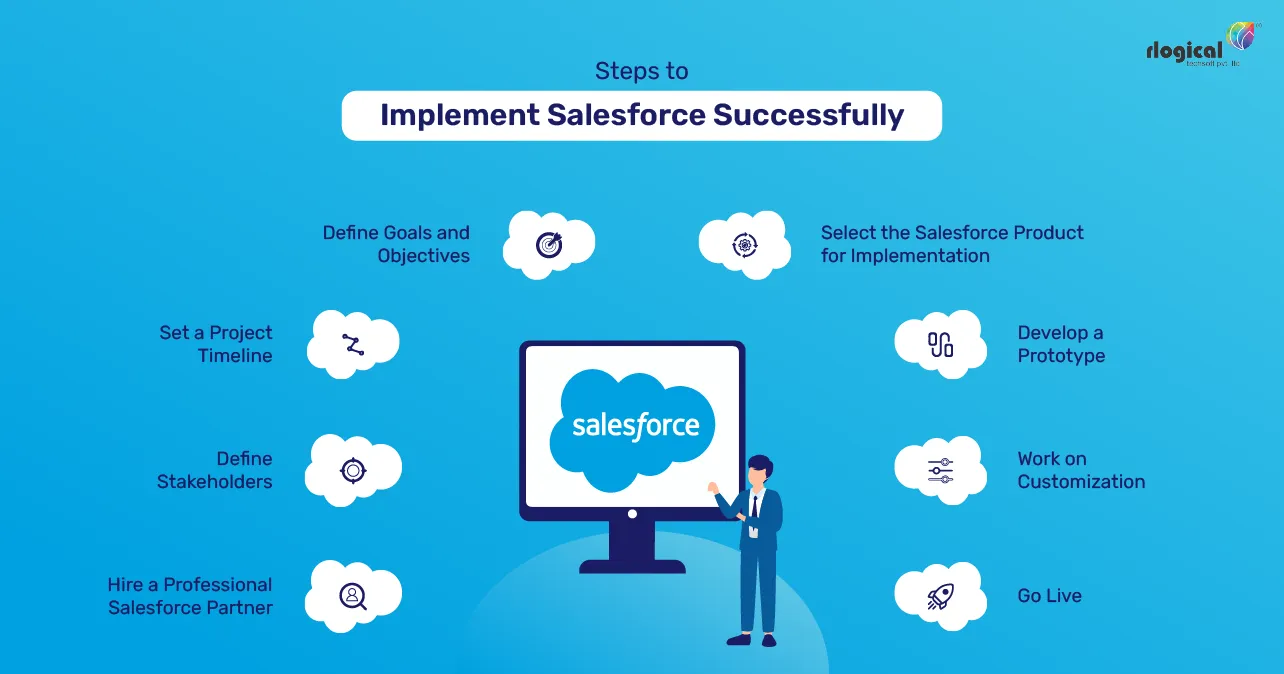
Implementing Salesforce can be both exciting and challenging. You know it can greatly improve your sales operations, but the process might seem complicated. This easy-to-follow Salesforce implementation guide will walk you through each step, from the initial setup to ongoing growth.
What Is Salesforce?
Salesforce is a powerful customer relationship management (CRM) platform designed to help businesses manage their sales, customer service, marketing, and other essential business functions. With its cloud-based architecture, Salesforce provides a scalable and customisable solution for businesses of all sizes. Whether you are looking to enhance your sales processes, improve customer interactions, or streamline operations, Salesforce offers a suite of tools to meet your needs.
Salesforce Implementation Process
Implementing Salesforce can be a transformative experience for your business. However, it requires a structured approach to ensure success. Partnering with a Salesforce implementation partner can significantly streamline this process, ensuring that you leverage the platform’s full potential.
Phase 1: Planning and Preparation
The first phase of the Salesforce implementation process involves thorough planning and preparation. This step sets the foundation for a successful implementation. Key activities in this phase include:
- Defining project goals and objectives
- Assembling a project team
- Establishing a timeline and budget
- Identifying key stakeholders and their roles
Phase 2: Understand Your Business Needs
Understanding your business needs is crucial for a successful Salesforce implementation. During this phase, you should:
- Conduct a detailed analysis of your current business processes
- Identify pain points and areas for improvement
- Define specific requirements and goals for the Salesforce implementation
- Engage with stakeholders to gather input and feedback
Phase 3: Design and Configuration
The design and configuration phase involves tailoring Salesforce to meet your specific business requirements. This phase includes:
- Creating a detailed design document
- Customising Salesforce objects, fields, and workflows
- Configuring user roles, permissions, and security settings
- Integrating Salesforce with existing systems and applications
Phase 4: Data Migration
Data migration is a critical step in the Salesforce implementation process. This phase involves transferring data from your existing systems into Salesforce. Key activities include:
- Cleaning and validating data to ensure accuracy and consistency
- Mapping data fields between systems
- Importing data into Salesforce using appropriate tools and techniques
- Verifying data integrity post-migration
Phase 5: Testing
Thorough testing is essential to ensure that your Salesforce implementation functions as expected. This phase includes:
- Conducting unit tests, system tests, and user acceptance tests
- Identifying and resolving any issues or bugs
- Validating that all business requirements are met
- Ensuring that integrations and workflows operate correctly
Phase 6: User Training & Adoption
User training and adoption are critical for the long-term success of your Salesforce implementation. This phase involves:
- Developing training materials and resources
- Conducting training sessions for end-users and administrators
- Providing ongoing support and resources for users
Phase 7: Deployment
Deployment is the phase where your Salesforce solution goes live. Key activities in this phase include:
- finalising configurations and settings
- Conducting a final round of testing
- Migrating any remaining data
- Officially launching Salesforce for your organisation
Phase 8: Post-Implementation Support
Post-implementation support is crucial to address any issues that arise after deployment and to ensure ongoing success. This phase involves:
- Monitoring system performance and usage
- Providing ongoing user support and training
- Making necessary adjustments and improvements
- Regularly reviewing and optimising your Salesforce setup
Conclusion
Implementing Salesforce is a comprehensive process that requires careful planning, execution, and support. By following a structured implementation process and partnering with a Salesforce implementation partner, you can maximise the benefits of Salesforce for your business. At Brysa Limited, we specialise in helping businesses implement and optimise Salesforce to achieve their goals. Contact us today to learn how we can support your Salesforce journey and drive your business success.
