

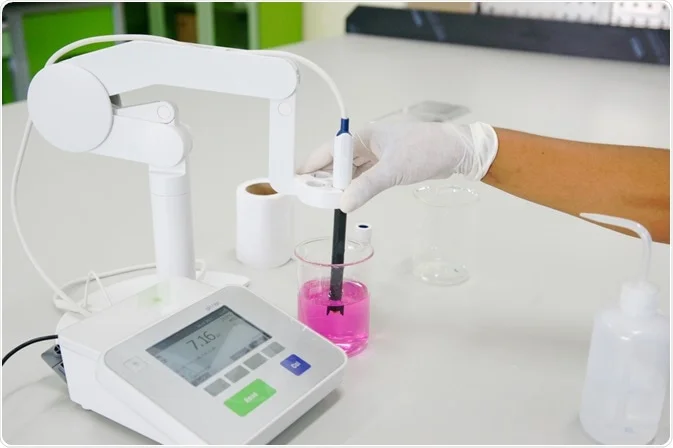
Digital pH meters for food and drink safety are accurate gadgets used in measurements of the acid or base content of various food products. These devices have a probe that can measure the activity of hydrogen ions in the specific solution and display the pH level on a digital readout. It is crucial, especially in providing food and alcoholic or non-alcoholic beverages, to maintain high quality, safe, and standard food production. PH can lastingly influence the eating qualities of produce, its texture, preservative activity, and even control food laws. Present-day digital pH meters are easy to use, hand-held, and may include ATC (Automatic Temperature Compensation) and DD (Data Display), amongst other features that are easier to use than previous models.
Here is how digital pH meters work:
Food and drink pH meters work on the principle of how much of the hydrogen ions in a solution affects the acidity or alkalinity of the solution. A probe and a digital screen generally integrate such meters. The probe is usually made of glass and contains two electrodes: The common electrodes are a sensing/working electrode and a reference electrode. When this probe is submerged in a solution, the hydrogen ions react with a glass membrane of a sensing electrode, which in turn produces a small voltage. This voltage is then compared with the stable voltage generated by the reference electrode. In place of the pH meter, the voltage difference is measured and then translated into the pH value displayed on the LED display.
Calibration
The calibration process is another significant procedure mentioned when using digital pH meters. In order to make a measurement, a pH meter must first be standardized with pH buffer solutions, usually pH 4, 7, and 10. This process entails replacing the probe in each buffer solution with the meter adjusted to the respective pH value of the solution. Daily calibration is important because the pH meter can be affected by several changes, such as temperature changes, contamination, and deterioration of the electrodes. Some of the contemporary digital pH meters come with the ATC feature that keeps modifying the pH depending on the temperature of the solution.
Timely and accurate results
Digital pH meters are advantageous in food and drink procedures in the following ways. They offer timely and accurate results for thickness measurement, which is crucial when measuring quality for consistency in the production of food and beverages. For instance, the pH level influences flavors, textures, and the shelf life of goods such as dairy, meat, wine, and beverages. Moreover, regulating the solution’s acidity and alkalinity is critical to kill bacteria hazardous to foods. Digital pH meters are convenient to carry around and use, making them flexible for use in laboratory and field tests.
Maintenance and proper handling
The choice and treatment of these present digital pH meters are crucial for accurate long-term utilization. The specific instructions indicated that after every use of the probe, it was necessary to rinse it with distilled water to prevent contamination of future measurements with the contaminated substances. Putting the probe in proper storage contains a wetted glass membrane to ensure the material does not dry out, as this would harm the sensor. It is similar for the filling solution of the reference electrode to be frequently checked and alternated regularly to achieve proper measurements. As highlighted above, by adhering to these maintenance practices, a user gets the assurance that the digital pH meters are performing as expected at every given time.
Final Thoughts
Digital pH meters are indispensable in the food and beverage field because their data affects quality, safety, and all other aspects relative to the standard. Due to their precision, convenience, and versatility, they can be used in numerous testing conditions, which makes them essential to producers and quality control laboratories
