

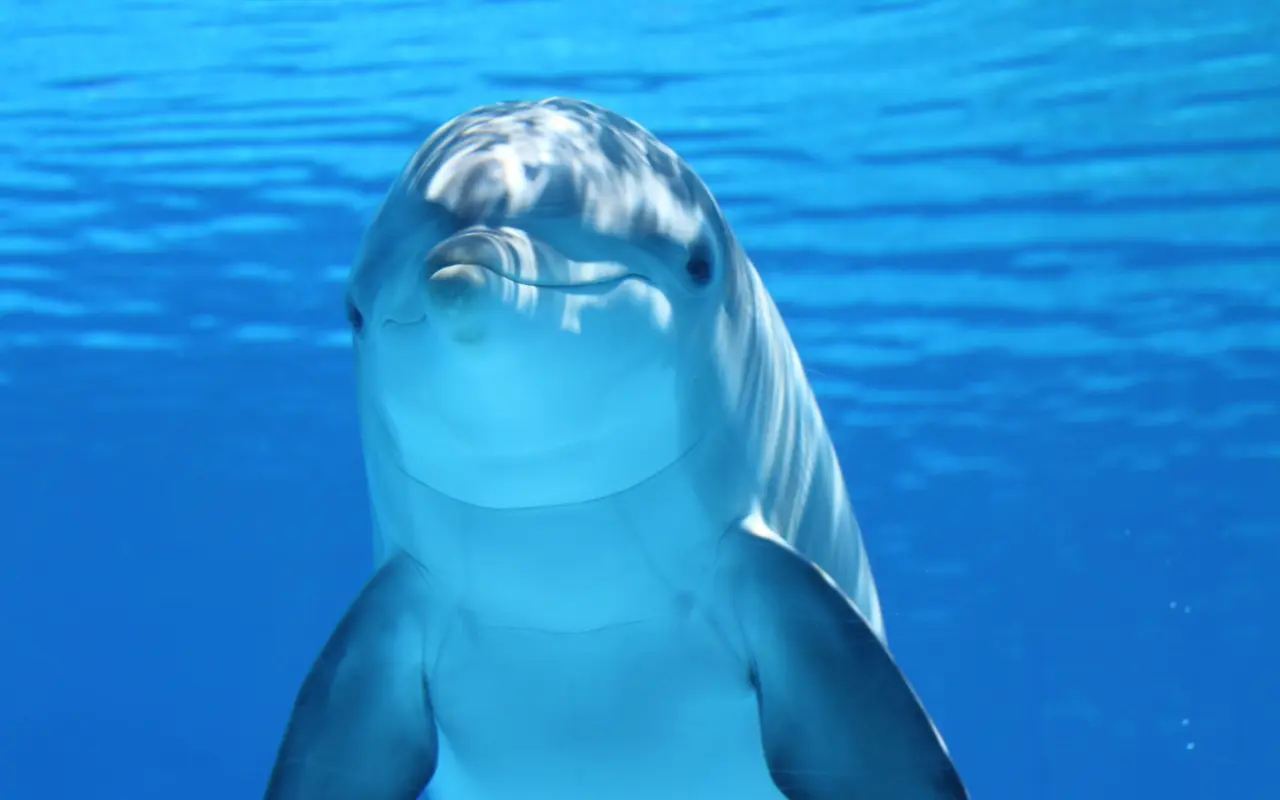
No wonder dolphins form one of the most popular and well-known aquatic species across the globe! Dolphins have been engaging human attention for thousands of years with their cute smiles, amazing acrobatic skills, and similarity in their appearance to humans. Despite their general appeal, some facts about these marine mammals are not known to many people. That is why we bring to you some of the most interesting dolphin facts.
Any freediver or scuba diver who has ever had the chance to log some bottom time with a dolphin (or pod of dolphins) would, without a doubt, relay that it is/was one of the most unforgettable experiences of their lives. You’re going to love dolphins even more after reading these dolphin facts, so beware. Find a variety of freediving courses and learn more about Apnea Boom.
These are ten interesting dolphin facts:
There exist some forty different species of dolphins in the various oceans of the world.
- Five species of dolphins are said to be living in freshwater rivers, of which one is the Amazon pink river dolphin, while others are found along the coasts in tropical and temperate oceans.
- Dolphins are meat eaters and consume everything from fish to squid to crustaceans. A dolphin weighing 260 pounds would consume 33 pounds of fish per day.
- Though playful, dolphins are, in fact, very smart. Their enlarged brains have evolved, surprisingly, much like humans’, and they are as resourceful as primates. Actually, after humans, they are said to be the second most intelligent mammals. Dolphins are capable of having individual names for each other and can identify themselves when they see a mirror.
- Dolphins belong to the biological order of the Cetaceans, which includes whales, their closest cousins. Orcas are the biggest dolphin species in the Delphinidae (dolphin) family.
- They are gregarious animals that live mostly in groups where they hunt and even play together. Superpods, or large groups of dolphins, can contain up to 1,000 individuals!
More Interesting Dolphin Facts
- These sea creatures give birth live, much like people do, however the baby comes out the tail first! Dolphins take nine to seventeen months to gestate, depending on the species. Dolphins are extremely maternal after giving birth. In order to help the calf take its first breath, the mother helps it to the surface. They have even been seen nesting and snuggling with their young.
- Dolphin calves, or infants, can nurse for up to two years, depending on the species. A calf can spend three to eight years living with its mother.
- Dolphins are not able to smell, yet they compensate with other remarkable senses. They can see quite well both underwater and on land. Dolphins’ sense of touch is highly developed. They are able to detect frequencies ten times higher than those of an adult human, and they are skilled at exploiting sound waves and echoes in dolphin echolocation to find concealed or distant objects.
- Dolphins’ natural adversaries are rare. Regretfully, the primary threat to them is humankind. The three biggest threats to dolphin populations globally are habitat pollution, targeted hunting, and being caught as bycatch in commercial fisheries. Regretfully, the Yangtze River dolphin went functionally extinct in 2006.
- Dolphins require surface breathing because they are mammals. Dolphins have different openings for different purposes than land mammals, which use their mouths for breathing and feeding. Dolphins breathe with their blowholes and eat with their mouths. This lowers the chance of drowning by keeping dolphins from drawing water into their lungs while they eat.
