

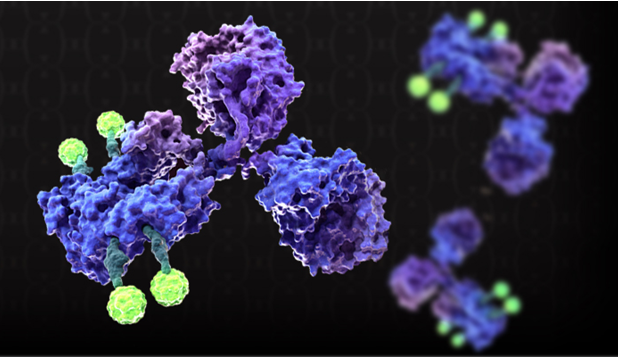
Antibody-drug conjugates (ADCs) are a family of targeted cancer therapies that mix the specificity of monoclonal antibodies with the strength of toxic medicines. The potency of ADCs primarily hinges on the release and metabolism of the adc payload, the physical toxic agent. Realizing these procedures is vital for optimizing ADC design, bettering healing efficacy, and understating off-target effects. This article will discuss the studies and methods we use in adc payload release and metabolism.
Contents
Logical Methods for Studying Payload Release: In Vitro Assays
In vitro assays are used to analyses the release of ADC payloads. These assays generally require covering the ADC with related natural matrices specified as plasma or cell lysates and studying the payload’s release. Basic methods include:
- Enzyme-Linked Immunosorbent Assay (ELISA): utilized to measure the quantity of released payload by discovering particular epitopes.
- High-performance liquid Chromatography (HPLC) classifies and measures the released payload, providing insights into the release kinetics.
- Mass Spectrometry (MS): allows elaborated information on the molecular structure of the released payload, providing the recognition of whatever modifications.
Cellular Models:
Cellular models are utilized to analyses the intracellular release and efficacy of the payload. These models require covering cancer cell lines with ADCs and assessing the payload’s toxic consequences and intracellular absorption. Methods used include:
- Fluorescence Microscopy: visualizes the ADC consumption and payload release within cells.
- Flow Cytometry: measures the interiorized ADC and released payload in a big population of cells.
- Western Blotting: notices particular proteins to measure the effect of the released payload on aim signalizing tracts.
In Vivo Methods for Studying Payload Release:
Animal Models:
Animal models, especially rodents, are utilized to analyses the pharmacokinetics and biodistribution of ADCs. These analyses need to deal out the ADC to the animal, and so accumulate blood, tissue, and organ samples at different time points to analyses the payload release and dispersion. Key techniques include:
- Immunohistochemistry (IHC): is used to figure out the ADC dispersion and the released payload within tissues.
- Positron Emission Tomography (PET): offers real-time figuring of the ADC and payload dispersion in live animals.
- Liquid Chromatography-Mass Spectrometry (LC-MS): measures the released payload in natural samples, proposing insights into its metabolic process and clearance.
Metabolism Studies: In Vitro Metabolism Studies
In vitro metabolism, analyses need to cover the ADC with liver microsomes or hepatocytes to imitate metabolic considerations. These analyses help discover the metabolic tracts and expected metabolites of the payload. Techniques utilized include:
- LC-MS/MS: discovers and measures metabolites, offering insights into the payload’s metabolic constancy and biotransformation tracts.
- Nuclear Magnetic Resonance (NMR) Spectroscopy allows functional information on metabolites.
Final Thoughts:
Analysing the release and metabolism of adc payload is critical for developing effective and secure ADC therapies. A blend of in vitro and in vivo methods provides an across-the-board realization of these methods. Analytical processes specified as HPLC, MS, and LC-MS are fundamental to these analyzes, enabling the elaborated analysis of payload release and metabolism. Cellular and animal models were added to increase our realizing by offering insights into the intracellular and general behavior of ADCs. Together, these schemes and methods add to the optimization of ADC intent, bettering their healing potency against cancer.
