

In this age of machine learning and AI, coupled with having access to huge data, storage, and processing technologies, companies nowadays are fueled by new data sources to see the creditworthiness of an individual. These new sources include bill payment histories, money market accounts, rent payment histories, and, peculiar of all, your grocery list.
Interestingly, new research was conducted by Notre Dame on how your grocery list can influence your credit score! You might be thinking, how will my grocery list prove my creditworthiness? How does it work?
The Research
How an individual shops and what specific products they have in their grocery lists can predict whether they pay your credit card balances and loan terms on time, according to the research from Notre Dame.
Marketing professors from Notre Dame have partnered with multinational conglomerates that run large supermarkets and credit issuers to look for a new way to prove an individual’s creditworthiness rather than the traditional credit score. By analyzing the data from these two business units, the authors have seen how 30,089 individuals shop and manage their money closely.
The research determined that people with consistent grocery shopping habits tend to pay their balances and meet their loan terms on time. These habits include shopping on the same day every week, spending the same average amount each month, having the same products on their lists on all of their grocery runs, and regularly taking advantage of deals commonly found in the supermarket.
Research has also found that what people have on their grocery lists can be used as a precedent for how they manage their finances.
For example, people who buy cigarettes and energy drinks are more likely to miss their payments on their balances and loans and have low scores on the credit scores ranges. In contrast, people who buy salad dressings and fresh milk tend to be more diligent about their dues.
In general, people who are more health conscious and buy healthy but less convenient food items are predicted to have a more responsible attitude towards paying their monthly loan and credit card balances. This was further supported by data sourced from the participants’ occupation, income, credit score, and family size.
Building on those findings, the research’s authors have developed a credit scoring algorithm that calculates credit scores based on the individual’s shopping habits and traditional credit risk indicators. Furthermore, the researchers have simulated approval decisions based on the algorithm and found that using grocery data can predict defaults much more accurately while boosting lenders’ per-customer profits.
Why Does It Matter?
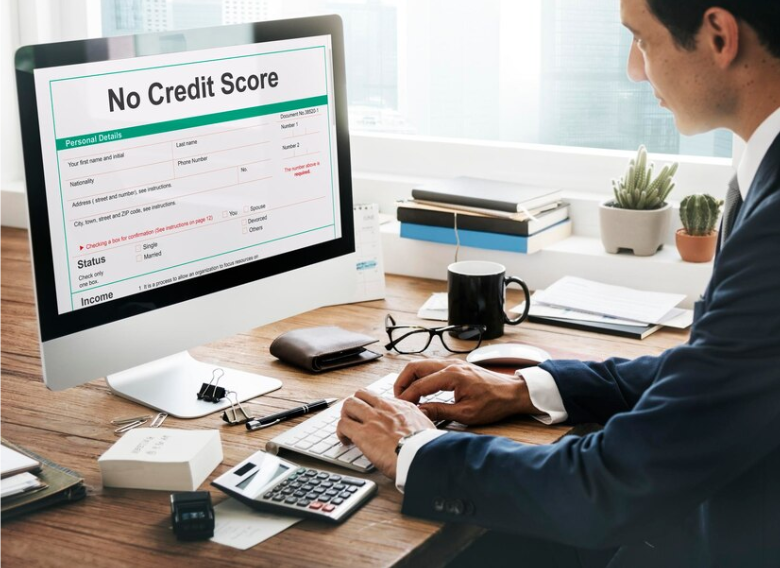
According to the World Bank, more than 1 billion people around the world lack access to formal financial systems, which means that the same number of people don’t have credit scores. In the US alone, millions of people have no credit history or one that is sufficient to generate a credit score.
This makes it hard for these people to have access to credit. Even if they have the characteristics of a responsible borrower, it will be hard for them to get a mortgage, car, or even job because they have no credit. It’s a huge problem that primarily affects underprivileged groups.
In response to this problem, researchers and policymakers are increasingly interested in looking for alternative credit rating methods to assess an individual’s creditworthiness. For example, Fannie Mae now looks into mortgage applicants’ histories on their rent payment as a data source to calculate creditworthiness. This allows people without access to credit to prove their creditworthiness to mortgage lenders.
With this benefit, they can now apply for mortgages for the houses they want without the hassle of building their credit scores from scratch.
What’s Next?
The researchers believe that their study serves as a proof of concept, offering insight into the design and implementation of future research using grocery lists as a source of creditworthiness data. However, several unanswered questions remain. For example, what if this approach affects different groups differently? What about the privacy of the borrowers? And so forth.
That said, the researchers’ future follow-up research will address these issues. Furthermore, they will collaborate with a conglomerate from Peru, a country that relies mostly on cash with a significant portion of the population who doesn’t opt for banks.
Final Words
While the research isn’t unfinished, the initial results can directly affect banks and lenders. Using grocery lists as sources of data for creditworthiness presents an opportunity for them to access an untapped market. With this, lenders can expand their customer base beyond traditional ways of proving a consumer’s creditworthiness.
