

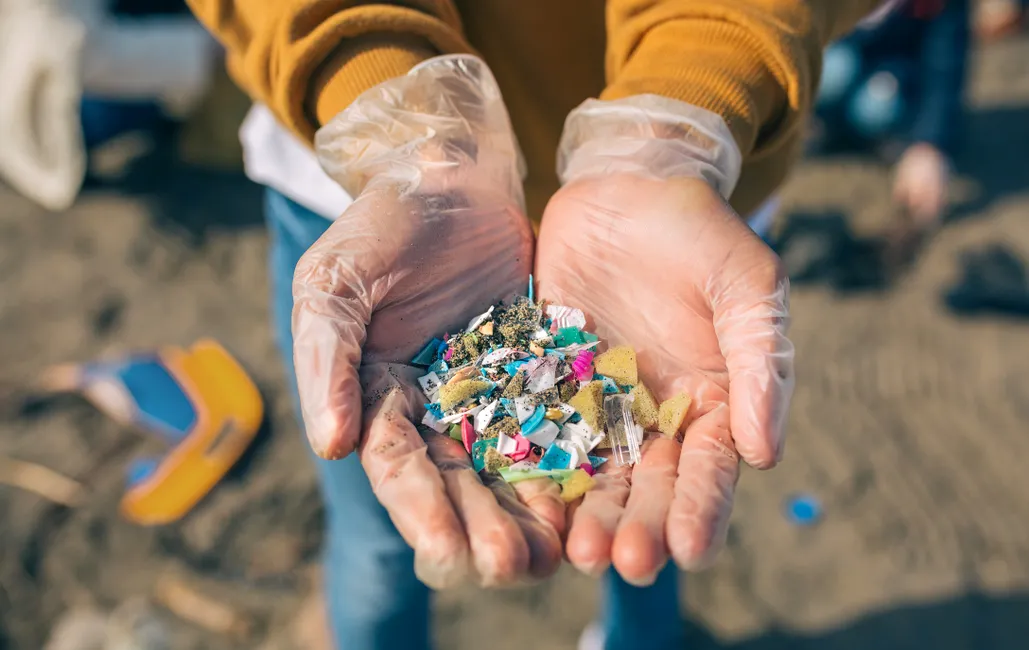
What Are Microplastics?
Microplastics are tiny plastic particles less than five millimeters in size. These small fragments can originate from a variety of sources and are categorized based on how they are formed and their sources.
Types of Microplastics
Microplastics are generally classified into two main types: primary and secondary. Primary microplastics are manufactured to be small, such as microbeads found in personal care products and industrial abrasives. Secondary microplastics result from the breakdown of larger plastic items, like bottles, bags, and fishing nets, through processes such as weathering and degradation.
Sources of Microplastics
Microplastics enter the environment through multiple pathways. Primary sources include products like cosmetics and cleaning agents, which contain microbeads. Secondary sources involve the degradation of larger plastic debris from items such as discarded packaging, fishing gear, and textile fibers that shed from synthetic clothing during washing.
How Microplastics Are Formed
The formation of secondary microplastics occurs through physical, chemical, and biological processes. Physical degradation happens due to mechanical actions like waves and currents, while chemical degradation is driven by UV radiation and oxidative reactions. Biological degradation involves the breakdown by microorganisms. These processes fragment larger plastics into progressively smaller particles, eventually forming microplastics.
Environmental Presence of Microplastics
Microplastics are found in various environments, including oceans, rivers, soils, and even the atmosphere. Their small size allows them to be widely dispersed by water currents and wind. They are often detected on shorelines, in deep-sea sediments, and even in remote locations far from human activities.
Importance of Studying Microplastics
Understanding microplastics is essential for developing effective strategies to manage plastic pollution. Researchers and experts study their sources, distribution, and behavior to inform policies and practices aimed at reducing their presence in the environment. By examining how microplastics move and accumulate, scientists can better predict their pathways and devise targeted interventions.
Innovations and Solutions
Experts are working on innovative solutions to tackle the challenge of microplastics. These include developing biodegradable alternatives to traditional plastics, improving waste management practices, and creating technologies to filter microplastics from wastewater. Additionally, policies aimed at reducing plastic use and promoting recycling play a crucial role in mitigating the introduction of microplastics into the environment.
Role of Public Awareness
Raising public awareness about microplastics is key to driving change. Educational initiatives and campaigns help inform individuals and communities about the sources and prevention of microplastic pollution. By fostering a better understanding, these efforts encourage more responsible consumption and disposal of plastics, contributing to overall environmental health.
Future Directions
The study of microplastics is an evolving field with ongoing research aimed at discovering new insights and solutions by microplastics experts. Future directions include developing advanced materials.
