

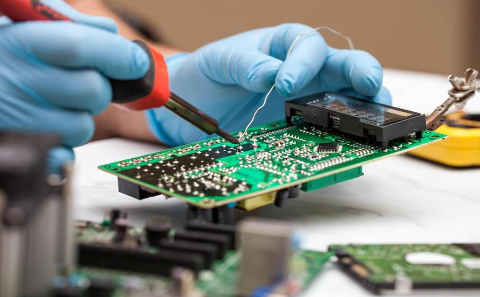
This article will show you how to do a manual DIP assembly for a PCB. This is a great way to get your project started, but be sure to have a good understanding of the process before starting.
Contents
1. Introduction
In order to ensure that your PCB assembly is of the highest quality, it is important to follow a few simple guidelines. One of the most important is to use the right PCB assembly process for your project. The two most common processes for assembling PCBs are through-hole and surface-mount (SMT).
Through-hole technology is typically used for larger components that need to be mounted on the other side of the board. This process involves drilling holes through the PCB and then inserting the components into the holes. The components are then soldered in place.
Surface-mount technology (SMT) is typically used for smaller components that can be mounted directly onto the surface of the PCB. In this process, the components are placed on the surface of the board and then soldered in place.
Both through-hole and SMT technology have their own advantages and disadvantages. Which process you use will depend on the specific requirements of your project.
Through-hole technology:
– Advantages:
1. Can be used for larger components.
2. Components are less likely to come loose.
3. Provides a stronger connection.
– Disadvantages:
1. Takes longer to assemble.
2. Requires more manual labor.
3. Not suitable for very small components.
Surface-mount technology:
– Advantages:
1. Can be used for smaller components.
2. Takes less time to assemble.
3. Requires less manual labor.
4. Suitable for very small components.
– Disadvantages:
1. Components are more likely to come loose.
2. Not suitable for larger components.
3. Provides a weaker connection.
2. What is DIP assembly?
When it comes to electronics manufacturing, there are a few different methods that can be used to assemble printed circuit boards (PCBs). One of these methods is DIP assembly, which stands for dual in-line package assembly.
DIP assembly is a type of surface-mount technology (SMT) that is used to assemble electrical components onto a PCB. In DIP assembly, the components are placed onto the surface of the PCB and then soldered in place. This type of assembly is typically used for small electronic devices, such as calculators and digital watches.
The main advantage of DIP assembly is that it is a relatively simple and quick process. This makes it ideal for small-scale production runs. Additionally, DIP assembly does not require special equipment, making it a more cost-effective option for small businesses.
There are a few disadvantages to DIP assembly as well. One is that it can be difficult to achieve a high degree of accuracy when placing the components onto the PCB. This can lead to problems with the electrical connection between the components and the PCB. Additionally, DIP assembly is not suitable for large-scale production runs.
If you are considering DIP assembly for your next PCB project, it is important to weigh the pros and cons to decide if it is the right option for you.
3. The benefits of DIP assembly
DIP assembly is a process of mounting and soldering electronic components onto a printed circuit board (PCB). The process typically involves placing the components onto the PCB in their correct positions and then soldering them in place.
There are many benefits to using DIP assembly for your PCBs. One of the main benefits is that it allows for a more reliable connection between the components and the PCB. This is because the connection is made at the point where the component is soldered onto the PCB, rather than at the point where the component is connected to the PCB via a connector. This means that there is less chance of the connection being broken or of the component becoming loose.
Another benefit of DIP assembly is that it can save you time and money. This is because the process is typically quicker than other methods of assembly, such as through-hole assembly. This means that you can get your PCBs assembled and ready for use more quickly. In addition, DIP assembly can be less expensive than other methods as it requires less equipment and fewer materials.
If you are looking for a reliable and cost-effective way to assemble your PCBs, then DIP assembly is definitely worth considering.
4. The process of DIP assembly
DIP (dual in-line package) assembly is a process of mounting and connecting electronic components on a printed circuit board (PCB). The process begins with the placement of the components on the PCB, followed by the soldering of the leads or terminals to the PCB.
The first step in DIP assembly is the placement of the components on the PCB. The components are placed in their respective locations on the PCB according to the circuit diagram. Once all the components are in place, the leads or terminals of the components are soldered to the PCB.
The leads or terminals of the components are soldered to the PCB using a soldering iron and solder wire. The soldering iron is heated and then the solder wire is melted and applied to the lead or terminal. The lead or terminal is then placed on the PCB and the solder is allowed to cool and harden.
After the leads or terminals are soldered to the PCB, the excess solder is removed from the PCB. This is done using a soldering iron and a solder wick. The soldering iron is heated and the solder wick is placed over the excess solder. The heat from the soldering iron melts the solder and the solder wick absorbs the molten solder.
The last step in DIP assembly is the inspection of the PCB. The PCB is inspected for any shorts or open circuits. The PCB is also inspected for any missing or incorrectly placed components.
5. The challenges of DIP assembly
DIP or Dual In-line Package assembly is a type of surface-mount technology (SMT) used to mount electronic components on a Printed Circuit Board (PCB). It is a process in which two or more electronic components are mounted on a PCB using solder paste or adhesive.
The main challenge in DIP assembly is to align the component leads accurately with the pads on the PCB. This is because the component leads are usually not in a straight line and are of different lengths. Another challenge is to ensure that the component is properly seated on the PCB so that it does not fall off during the soldering process.
In order to achieve accurate alignment, the component leads need to be inserted into the correct holes on the PCB. This can be a challenge, especially if the component leads are not in a straight line. Another challenge is to ensure that the component is properly seated on the PCB so that it does not fall off during the soldering process.
Another challenge in DIP assembly is to prevent the component from falling off the PCB during the soldering process. This can be done by using a jig or a fixture to hold the component in place while the soldering is taking place.
A final challenge in DIP assembly is to ensure that the solder joint is strong enough to withstand the thermal and mechanical stresses that it will be subjected to during use. This can be done by using a higher-quality solder paste or by using a solder with a higher melting point.
6. Tips for DIP assembly
Assembling your own DIP circuits can be a great way to save money and get exactly the components you need. But if you’ve never done it before, the process can seem a bit daunting. Here are a few tips to help you get started:
1. Choose the right PCB.
The first step is to choose a PCB that is designed for DIP assembly. This type of PCB will have wide, spaced-apart traces that can accommodate the large DIP packages.
2. Place the DIPs.
Start by placing the DIPs on the PCB. It can be helpful to use a template to ensure that the DIPs are placed in the correct location.
3. Solder the DIPs.
Once the DIPs are in place, solder them to the PCB. Make sure to use a low-temperature solder so that you don’t damage the components.
4. Test the circuit.
After the DIPs are soldered, it’s a good idea to test the circuit to make sure everything is working properly.
5. Protect the circuit.
Once the circuit is working properly, you’ll want to protect it from damage. One way to do this is to encase the entire circuit in a clear resin.
6. Label the circuit.
Finally, be sure to label the circuit so that you know what it is and how it should be used. This will help you keep track of your circuits and prevent any accidental damage.
7. Conclusion
When it comes to printed circuit board (PCB) assembly, the process of installing electronic components onto the board can be done manually or using a machine. The method you choose will depend on a number of factors, including the number of boards you need to assemble, the complexity of the design, and the budget you have to work with.
If you’re working on a small number of simple boards, manual assembly might be the best option. This method is typically less expensive than using a machine, and it gives you more control over the process. You can also make changes to the design more easily if you’re working with a small number of boards.
However, if you’re working on a large number of boards or a more complex design, you’ll probably want to use a machine to assemble the boards. Machine assembly is faster and more consistent than manual assembly, and it’s less likely that you’ll make mistakes.
No matter which method you choose, it’s important to have a clear understanding of the process before you start. In this article, we’ll give you an overview of the steps involved in manual and machine assembly so you can decide which method is right for your project.
Manual Assembly
1. Prepare the Components
The first step in manual assembly is to prepare the components you’ll be using. This includes sorting and organizing the components, as well as preparing the PCB for assembly.
2. Place the Components
Once the components are prepared, you’ll need to place them on the PCB. This step can be done by hand or using a placement tool.
3. solder the Components
After the components are in place, you’ll need to solder them to the PCB. This step will connect the components to the PCB and create the electrical connection between them.
4. Inspect the Board
Once the soldering is complete, you’ll need to inspect the board to make sure everything is correct. This includes checking the soldering joints and making sure there are no shorts or open circuits.
Machine Assembly
1. Prepare the Components
As with manual assembly, the first step in machine assembly is to prepare the components. This
When it comes to electronics manufacturing, few things are as important as the quality of your printed circuit board (PCB) assembly. That’s why many companies choose to use a manual DIP assembly process for their PCBs.
A manual DIP assembly is a process in which each component is placed and soldered by hand. This process is often used for high-precision assemblies, as it allows for greater control and accuracy than automated processes.
There are several benefits to using a manual DIP assembly process for your PCBs, including:
Greater accuracy: When components are placed and soldered by hand, there is less room for error. This is important for ensuring the quality of your final product.
Better control: With a manual DIP assembly, you have more control over the entire process. This allows you to make changes as needed and ensure that each component is placed correctly.
Flexibility: A manual DIP assembly process is more flexible than an automated process. This means that you can easily make changes to the assembly process if necessary.
Lower costs: In many cases, a manual DIP assembly process can be less expensive than an automated process. This is because you won’t need to purchase expensive equipment or software.
There are some drawbacks to using a manual DIP assembly process, including:
Higher costs: In some cases, a manual DIP assembly process can be more expensive than an automated process. This is because it can take longer to assemble each PCB.
Less efficiency: A manual DIP assembly process can be less efficient than an automated process. This is because it can take longer to assemble each PCB.
Lower throughput: A manual DIP assembly process can have a lower throughput than an automated process. This is because each PCB must be assembled by hand.
Despite these drawbacks, a manual DIP assembly process can be the best choice for your PCBs. This is because it offers greater accuracy, control, and flexibility. If you are looking for a quality PCB assembly, a manual DIP assembly process is a great option to consider.
