

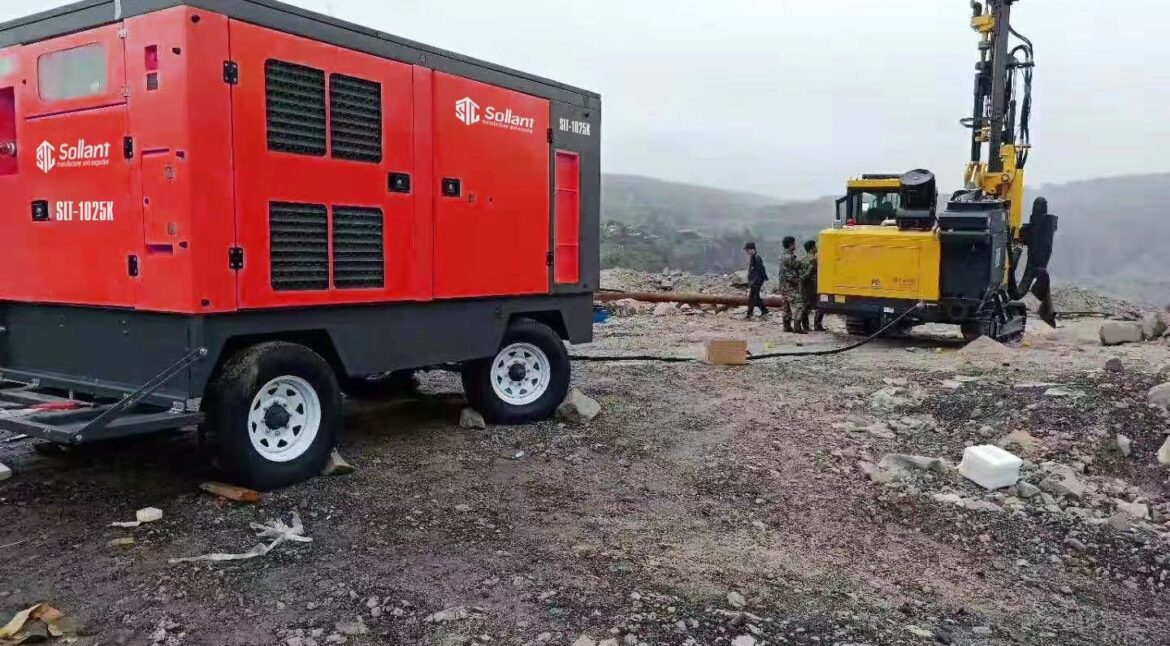
Industrial work depends on reliable sources of energy. In many situations, this requirement is not limited just to electricity. Systems such as generators make sure that work continues even when direct power is not available. Alongside this, compressed air has become equally important in supporting tools, machinery, and daily processes.
Portable compressors play an important role in meeting this demand. They provide a steady stream, which helps teams carry out their tasks.
When a portable compressor is available on site, it becomes easier to manage different activities. Workers can rely on a constant supply of air.
As a result, the overall output remains consistent. The system supports smooth operations.
What Defines a Portable Compressor?
A portable compressor is a machine that produces compressed air and can be moved from one place to another with ease.
It works by drawing in ambient air. The machine then compresses this air inside a chamber. After this step the air is released at a higher pressure so it can be used for industrial tasks.
This process allows equipment to operate without needing a fixed system. As a result, workers can carry out their work more freely and adjust to changing site conditions.
Unlike stationary systems, portable units are built with mobility in mind. They are often mounted on wheels or compact frames, which allows them to be positioned close to the point of use. This design reduces the distance between the source of air and the task itself. The structure and function of these compressors make them suitable for a wide range of industrial environments where flexibility is required.
Contents
Portable Compressors in Everyday Industrial Applications
Portable compressors support many types of work across different industries. They are used in daily tasks where a supply of air is required.
In construction, they provide the air needed to run breakers, drills, and compactors. In manufacturing environments, portable compressors operate assembly tools and maintain production lines.
Maintenance and repair work also depend on compressed air systems. A portable air compressor is used for cleaning equipment, removing debris, and supporting inspection tasks. Their ability to move between locations allows technicians to carry out their work without relying on fixed infrastructure.
Mobility as a Practical Advantage in Dynamic Work Environments
Mobility is one of the defining features of portable compressors. Industrial sites often change in layout as work progresses. Equipment needs to be repositioned, and tasks shift from one area to another. A system that can move with these changes offers a clear advantage.
Portable compressors can be transported directly to the point of operation. This reduces the need for long air lines and complex setups. It also allows teams to begin work without delay. In environments where time is critical, this flexibility supports better planning and execution.
The ability to relocate equipment also improves site organization. Workers can place the compressor where it is most effective, which helps maintain order and reduces unnecessary movement across the work area. This leads to a more controlled and efficient workflow.
Consistent Air Supply for Stable Performance
Consistent supply of compressed air is important for the proper working of industrial systems. When the pressure changes. It also increases the chances of mistakes during operation. Portable air compressors are built to provide a steady flow of air so work can continue consistently.
This steady output helps tools perform in the way they are designed to. There are no sudden drops in performance that may slow down the task. It also helps in reducing interruptions that can delay progress. When the air supply remains stable, workers can focus on their tasks instead of dealing with equipment problems.
A consistent system also protects the machinery. When equipment runs within its proper limits, it faces less stress. This helps in extending its working life and reduces the need for frequent repairs. In the long term it supports a more reliable and practical approach to daily operations.
Conclusion
The air compressor forms an essential part of modern industrial systems. They support a wide range of tasks and provide the flexibility needed to adapt to changing conditions. Their ability to deliver consistent performance allows teams to work with confidence and maintain control over their environment.
