

Steel is one of the oldest metals in the universe dating as far back as 223 B.C and was commonly used by Romans. Ancient civilized societies discovered how to make steel from raw iron since earth’s crust is nearly 5% made of iron. This makes it the second most abundant metal on earth.
To create steel, 2% of Carbon is added to iron at extremely high temperatures. One major aspect of steel production is heat treatment. Heat treatment enhances metal properties, like durability, strength and turgidity. This process is crucial for the performance and longevity of steel and other metallic parts.
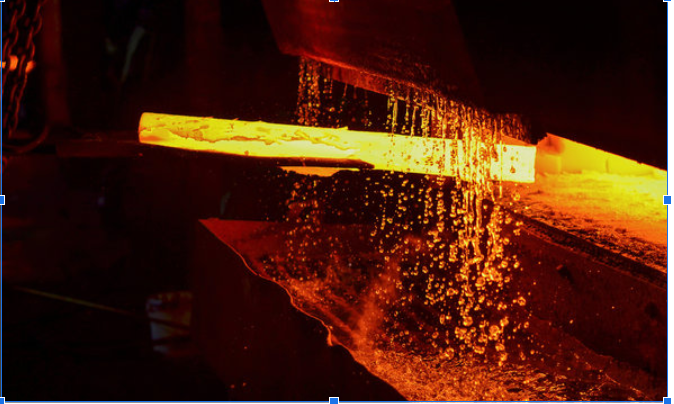
Heat Treatment on Metals (Image Source: Adobe Stock)
For injection molding manufacturers, heat treatment is important as it enhances the physical capabilities of the metals even when exposed to repeated use and high pressure. For custom injection molding, metals exposed to heat treatment provide precise parts which is generally critical for high-quality molded products. In this article, we shall explore all there is to know about heat treatment.
Contents
Overview of Heat Treatment Processes
To enhance the various properties of metals, heat treatment has designated processes to achieve these goals in different industries. Such processes include:
- Annealing
- Quenching
- Tempering
- Hardening
- Normalizing
- Annealing
Annealing can be described as heating metal to a specified temperature and then allowing it to cool down slowly. This is to reduce hardness and increase its ductility. This process allows metals to be easy to handle and improve their machinability. Annealing can be applied in machinery or improving the mechanical properties of steel. This in turn results in enhanced material stability and reduced internal stresses.
- Quenching
Quenching involves cooling a metal in quick succession after it has been heated thus hardening the metal.Quenching media can vary with common ones being water, oil and air. Each medium has its own cooling speed but water is the fastest whereas air is the slowest. The quenching medium affects the hardness and strength of the metal differently.
- Tempering
Tempering is done after quenching and it involves the reheating of metal to a lower temperature and then cooling it, the reason being to reduce brittleness and improve toughness. Tempering is very important because it brings balance between hardness gained from quenching and ductility needed for practical use. This ensures that the metal is indeed strong but not too brittle.
- Hardening
To make metal harder, metalworkers heat and then cool it by plunging it into water. Depending on what is desired, they use different methods to achieve this goal. As a result of this tough love, the material becomes difficult to scratch or mar. These enhanced metals are used in factories for constructing molds that can take a lot of abuse and produce parts under immense stress repeatedly. To get mold bits that don’t give up, they have to be put through the wringer. It’s as simple as that if you want molds which remain intact over time.
- Normalizing
Similar to annealing with only the exception of a cooling medium which is air that cools quicker, rather than in a furnace. This helps in refining the grain structure of the metal to improve its mechanical properties.Normalizing is most commonly used for metals that will be further processed by machining or forming.
Heat Treatment of Metals (Image Source: Megaspa)
Effects of Heat Treatment on Metal Properties
Heat treatment impacts metal characteristics like hardness, toughness, ductility, strength, and residual stresses. Let’s explore them in detail below!
Hardness
Metals’ hardness can be significantly affected by heat treatment processes. As discussed earlier, quenching increases hardness by rapidly cooling the metal making it more resistant to deformation. Annealing decreases hardness by slowly cooling the metal thus making it softer. In mold manufacturing metals are hardened to create durable molds that can withstand high pressure and wear.
Toughness
Toughness refers to a metal’s ability to absorb energy and deform without breaking. To balance toughness with hardness, we employ the tempering technique. After quenching, metals are often too brittle and tempering reheats the metal to a lower temperature, reducing brittleness and increasing toughness. This balance is essential for parts that need to be both hard and resistant to impact.
Ductility and Malleability
The ability of a metal to deform under stress without breaking can be measured by ductility and malleability. Annealing softens metal, boosting its malleability. Ductility can also be enhanced by normalizing the grain structure of the metal. These processes enable easier formation of metals which is essential for manufacturing processes requiring significant deformation.
Strength
Heat treatment processes like hardening and tempering significantly enhance the strength of metals. Hardening involves heating and then rapidly cooling the metal to increase its strength. Tempering follows to reduce brittleness while maintaining increased strength. This combination is crucial in applications where metals need to be strong yet not overly brittle, such as in mold manufacturing and custom injection molding.
Residual Stresses
Heat treatment also reduces residual stress within metals. Residual stresses can be termed as internal stresses that remain in a metal after it has been machined.after some time, these stresses do lead to deformation or failure. Annealing and normalizing aid in relieving these stresses thus improving the metal’s stability and life-span.
Heat Treatment in Custom Injection Molding
Heat-treated metals play a crucial role in custom injection molding. They ensure that molds are durable and can withstand high pressures and temperatures. This durability is essential for producing high-quality, consistent parts.
Case Studies of Improved Mold Performance
Various case studies showcase the benefits of heat-treated molds. For instance, manufacturers who used hardened steel molds made significant progress in mold’s lifespan and part quality.
I separate scenarios, tempering minimizes mold brittleness that leads to few defects and low maintenance costs. This results in more efficient production and increased customer satisfaction.
Specific Requirements for Different Molding Applications
Different molding applications have specific requirements for mold materials as below:
- Automotive Parts: they often require molds that have the ability to handle high pressure and temperatures thus applicable for heat-treated metals.
- Medical Device Manufacturing: Demand high precision and biocompatibility and often require specialized heat treatment processes
- Consumer Electronics: Molds with excellent surface finishes and tight tolerances can be achieved through precise treatment.
Metal Heat Treatment (Image Source: Istock)
Conclusion
In modern manufacturing and engineering, heat treatment is important as it allows changing of properties of metals by keenly controlling the heating and cooling procedures. This leads to improved hardness, ductility, toughness and heat conductivity making metals suitable for required needs.
As much as heat treatments are complex and expensive, its benefits are quite significant and thus making it a valuable method in the field because of its wide range of application and advantages. With advances in technology, it is possible to even gain better control over material properties leading to new applications and innovations.
