

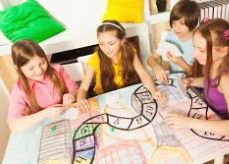
Social skills are essential for togel children as they navigate relationships, build friendships, and learn to communicate effectively. While some children may naturally excel in social situations, others might need a little more guidance and practice. One of the most effective ways to foster social skills in kids is through play. Games can create a relaxed and fun environment where children can learn to interact, share, cooperate, and communicate. Here are several engaging games to help kids practice their social skills.
Contents
1. Charades
Charades is a classic game that encourages creativity, teamwork, and nonverbal communication. Players take turns acting out words or phrases without speaking, while others guess what it is.
How to Play:
- Divide the group into teams.
- Write down various words or phrases on slips of paper and place them in a bowl.
- A player from one team draws a slip and acts out the word or phrase while their team guesses.
- Set a time limit for each round, and switch turns between teams.
Charades not only fosters teamwork but also helps kids learn to interpret body language and gestures, which are crucial components of social interaction.
2. Role-Playing Games
Role-playing games (RPGs) allow children to step into different characters and scenarios, helping them practice empathy and perspective-taking. This can be particularly effective for teaching social skills in specific contexts, such as making new friends or resolving conflicts.
How to Play:
- Set up different social scenarios that children might encounter, such as introducing themselves to a new classmate, asking to join a game, or handling a disagreement.
- Assign roles and let kids act out the scenarios. Encourage them to think about how their characters would feel and respond.
- After each role-play, have a discussion about what went well and what could be improved.
Role-playing helps children understand social cues and develop empathy, making it easier for them to navigate real-life situations.
3. Simon Says
Simon Says is a fun and simple game that encourages listening skills and following directions. It requires kids to pay attention and respond appropriately, which are essential skills in social interactions.
How to Play:
- Choose one child to be “Simon.” Simon gives commands, and players must only follow the command if it starts with “Simon says.”
- For example, “Simon says touch your toes.” If Simon says, “Touch your toes,” without prefacing it with “Simon says,” anyone who does so is out.
- The last player remaining becomes the next Simon.
This game teaches kids to listen carefully and think before they act, promoting better communication and understanding in social settings.
4. Group Storytelling
Group storytelling is a creative way for children to collaborate and practice communication skills. This game encourages teamwork, active listening, and respect for others’ ideas.
How to Play:
- Sit in a circle and decide on a story prompt (e.g., “Once upon a time, in a magical forest…”).
- One child begins the story with a sentence or two, and then each child adds to the story in turn.
- Encourage kids to build on each other’s ideas and keep the story going.
This activity fosters creativity and helps children learn to listen to others, validate their contributions, and practice turn-taking.
5. Cooperative Board Games
Cooperative board games are designed for players to work together toward a common goal rather than compete against each other. These games promote teamwork, communication, and problem-solving.
Recommended Games:
- Forbidden Island: Players work together to collect treasures and escape from a sinking island.
- Outfoxed!: A cooperative whodunit game where players gather clues to solve a mystery.
- Hoot Owl Hoot!: A color-coded cooperative game where players help owls return to their nests before sunrise.
Playing cooperative games teaches kids the value of collaboration and highlights the importance of communication in achieving shared goals.
6. Team Sports
Team sports are a fantastic way for kids to practice social skills in a dynamic and active environment. Through teamwork, communication, and strategy, children learn how to work together and support one another.
Popular Team Sports:
- Soccer: Teaches teamwork, communication, and coordination.
- Basketball: Encourages passing, teamwork, and strategic thinking.
- Baseball: Teaches cooperation, following rules, and supporting teammates.
Participating in team sports helps kids develop social bonds, learn to handle winning and losing gracefully, and improve their communication skills on and off the field.
7. Murder Mystery Games
Murder mystery games offer a fun and interactive way for kids to practice critical thinking, collaboration, and communication. These games require participants to work together to solve a fictional crime.
How to Play:
- Choose a murder mystery kit or create your own scenario with characters and clues.
- Assign roles to each child and provide them with background information about their characters.
- As players interact, they must gather information, share clues, and collaborate to solve the mystery.
This engaging format encourages kids to communicate effectively, listen actively, and engage in group discussions, enhancing their social skills.
8. Emotion Charades
Similar to traditional charades, Emotion Charades focuses on identifying and expressing emotions. This game helps children recognize and understand different feelings, which is vital for social interactions.
How to Play:
- Write down various emotions on slips of paper (e.g., happy, sad, angry, excited).
- Players take turns drawing a slip and acting out the emotion without using words.
- Others must guess the emotion being portrayed.
This activity fosters empathy and emotional intelligence, enabling children to better understand their own emotions and those of others.
9. Friendship Bingo
Friendship Bingo is a creative way to help kids learn more about their peers and build connections. This game encourages communication and engagement among participants.
How to Play:
- Create bingo cards with various statements or characteristics related to social interactions (e.g., “has a pet,” “likes pizza,” “has traveled to another country”).
- Kids mingle and ask each other questions to fill in their bingo cards.
- The goal is to get five in a row, either horizontally, vertically, or diagonally.
This game encourages kids to practice initiating conversations, asking questions, and learning more about one another, promoting social bonding.
10. Compliment Circle
A compliment circle is a simple yet effective game that fosters positivity, self-esteem, and social skills. It encourages children to express appreciation for one another in a supportive environment.
How to Play:
- Gather the group in a circle.
- Each child takes a turn giving a compliment to the person on their right.
- Encourage specific compliments that focus on positive qualities or actions.
This game helps children practice giving and receiving compliments, enhancing their social skills while promoting a positive atmosphere.
Conclusion
Games provide a fun and effective way for kids to practice their social skills while engaging in enjoyable activities. By incorporating games like charades, role-playing, and cooperative board games into playtime, children can develop essential communication skills, empathy, and teamwork. These experiences not only enhance their ability to interact with peers but also build confidence and foster positive relationships. So gather your family and friends, and let the games begin!
