

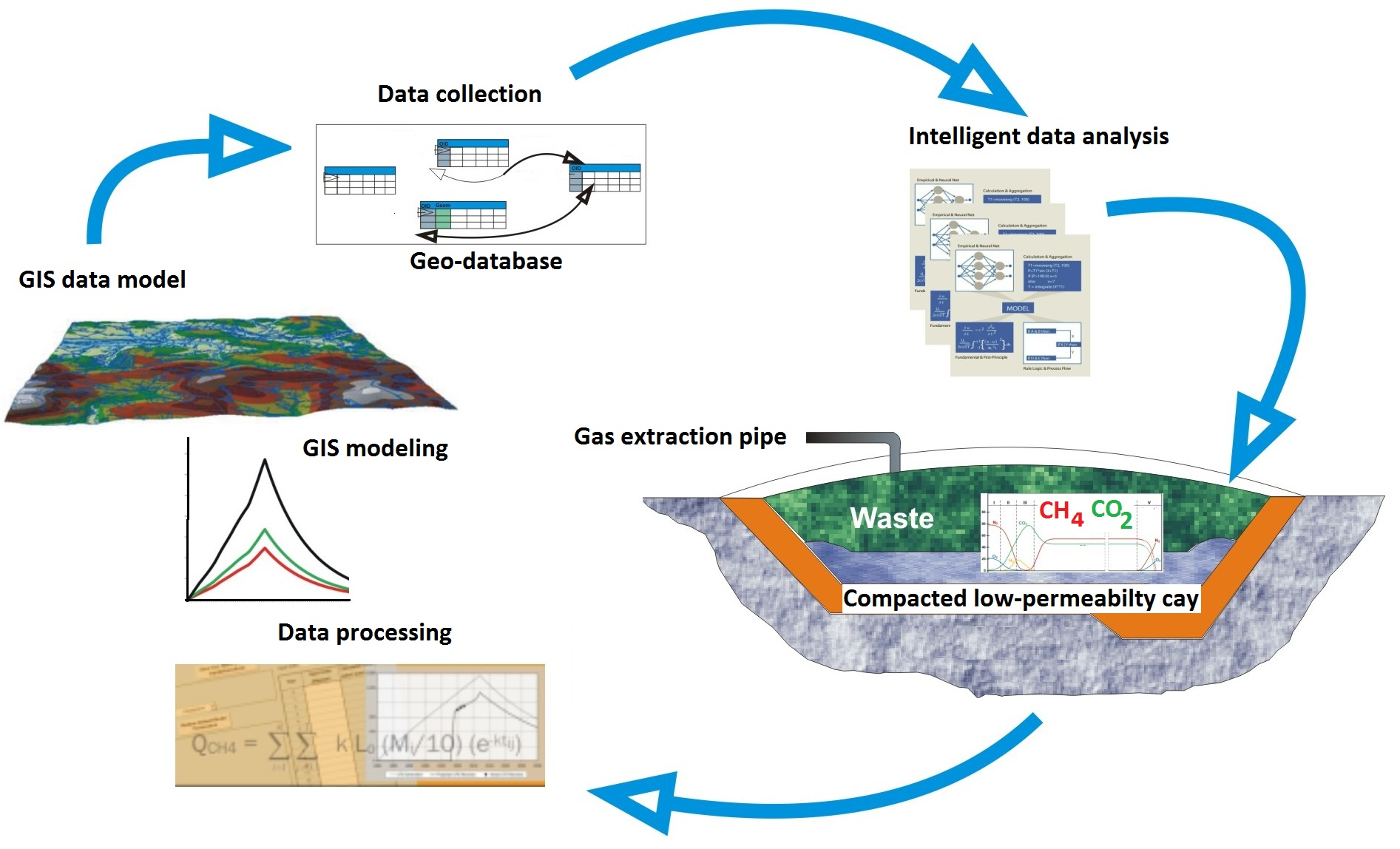
Across the globe, landfills are not only critical for waste management but also significant sources of greenhouse gas emissions. Methane, as a major greenhouse gas, has a much greater potential impact on global warming than carbon dioxide. As such, the effective detection and control of methane emissions from landfills have become key topics in environmental protection. With continuous advancements in technology and the gradual improvement of regulatory policies, the future trends in landfill methane detection are gradually emerging in new directions.
- Trends in Technological Development
As technology rapidly evolves, new sensor technologies and data analysis methods are revolutionizing landfills methane detection. Traditional methane detection often relies on ground-based equipment or handheld devices, which not only have low efficiency but may also miss subtle leaks. In recent years, the widespread adoption of drone technology has ushered in a new era of methane detection.
Take the Purway methane detector as an example. This device, compatible with DJI’s Matrice 300 series drones, employs advanced TDLAS (Tunable Diode Laser Absorption Spectroscopy) technology. This significantly improves detection accuracy by combining complex detection lasers with visible light sensors, providing dual advantages in methane inspection. The device also incorporates intelligent gimbal stabilization technology, which ensures high stability during flight, thereby maintaining detection accuracy.
Additionally, the Purway methane detector boasts a detection range of up to 300 meters and a rapid response time of just 10 milliseconds. This allows operators to quickly capture the location and concentration of methane leaks while the drone is in flight, further improving operational efficiency. With integrated GPS positioning, this device provides real-time data and generates detailed reports for subsequent analysis and regulation.
Looking ahead, with further advancements in sensor technology, we are likely to see more integration of artificial intelligence in data analysis tools. These tools could process vast amounts of sensor data in a short time, automatically identifying potential leak points and using historical data to predict and prevent future leaks.
- The Direction of Regulatory Policy
In addition to technological progress, the future of landfills methane detection will be driven by regulatory oversight. As global concern over greenhouse gas emissions grows, many countries and regions have either implemented or are planning to implement strict methane emission regulations.
Europe and North America have been at the forefront of introducing strict regulations for landfills. For example, in the United States, the Environmental Protection Agency (EPA) has established specific detection standards for methane emissions from landfills. In the European Union, the European Green Deal sets clear goals for reducing greenhouse gas emissions, which includes controlling methane emissions from landfills.
At the same time, China is accelerating its efforts in landfill methane detection and regulation. In recent years, with increasing attention to environmental protection, many cities have started using drones for gas monitoring at landfills. In the future, more specific policies on methane emissions are expected to be introduced, eventually forming mandatory standards.
For instance, in a case study using the Purway methane detector at a large landfill, the device, mounted on a drone, successfully identified several subtle methane leaks that were otherwise undetectable. With detailed GPS positioning and concentration reports, the landfill management quickly implemented corrective measures, preventing further environmental damage from methane spread. This case demonstrates not only the importance of advanced technology in real-world applications but also provides reliable data to support the development and enforcement of regulations.
- Future Outlook
In the future, landfills methane detection technology will become more automated and intelligent, and regulatory policies will become stricter and more comprehensive. The global application of high-precision devices like the Purway methane detector will significantly enhance the management of methane emissions from landfills.
The development of technology and the push from policy work hand in hand to shape the dual trends in the future of landfill methane detection. With the help of new sensors and data analysis tools, we will not only be able to better monitor methane leaks but also use predictive models to prevent potential leaks in advance, effectively reducing greenhouse gas emissions and supporting global climate goals.
In conclusion, as new technologies continue to emerge and regulatory policies become more refined, landfill meth
