

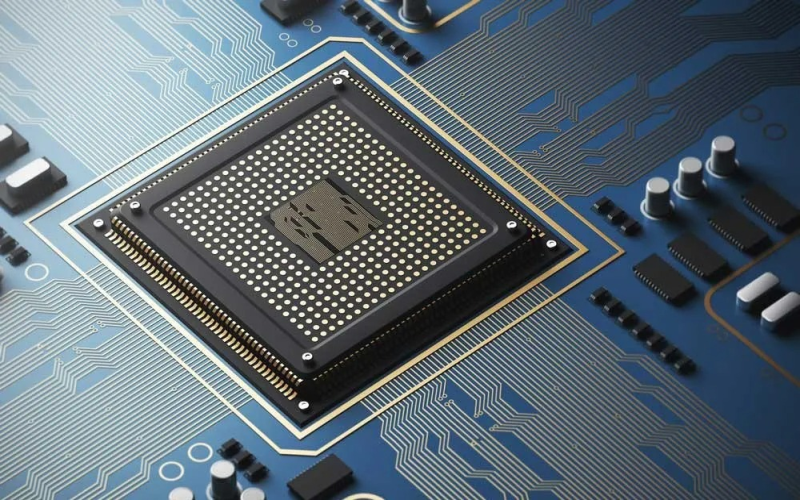
Due to the constant development in electronics technology the quest for higher production rates and performance has become an important factor for designers and the hardware manufacturers. Printed Circuit Board (PCBs) form an important part of almost every electronic gadgets, being the fundamental structure that caters for component interconnection and support. Therefore, making certain their effortless and effectiveness in manufacture is significant for the manageable and sound final products. This article focuses on DFM and the possibility of hardware designers applying specific techniques to improve the yields of the PCBs and the overall quality of the hardware.
Contents
Design for Manufacturability: An Overview
DFM is a pre-emptive method that attempts to make the design for production with manufacturers’ constraints and conditions in mind. Thus, the integration of manufacturability concerns during the initial phase of the hardware design process allows for the avoidance or minimization of problems that may later arise in the production stage, and ultimately increase device reliability at a decreased cost.
DFM also involves a set of standards and procedures that apply to several aspects of manufacturing design such as material use, component positioning, trace routing, and testing. Therefore, by employing the principles of DFM, hardware designers are able to produce PCB designs that are less likely to present manufacturing challenges, thus improving the chances of elimination of defects, reworking, and production holdups.
Strong Component Selection and Placement
One of the core factors in DFM as a concept for PCB manufacturing is the right choice and positioning of components. IC designers should also prefer using standard chips that are widely available in the market since this not only reduces the search for the parts, but also because of their robust and proven performances. Finally, designers should also identify size and weight of the components and their thermal properties to prevent interference in their location and to avoid overheating.
Another important aspect that directly affects component density is the placement of these components. Thus, the goal of the MinGW hardware designers should be to keep the component density as low as possible while preserving a sensible routing topology and signal integrity of modules. Through careful direction of components, designers make sure that there will be minimal electromagnetic interference, that the assembly rework processes will be efficient and that the board reliability is improved.
PTT (Power Trace Target) and LPT (Layout Power Trace)
Traces present on the surface and internal layers of a PCB are highly inter-connected and these connections act as a backbone for conducting signals, power and affecting the performance of circuits. Decimating manufacturing yields is a potential laundry list of manufacturing problems that may occur when DFM is performed haphazardly; thus, hardware designer must observe strict trace routing practices to avoid a poor yield.
One is keeping to the design rules that dictate minimum dimensions of the features on the layout such as the width of traces and the clearance and spacing between them. These rules are developed in consideration of the fabrication capability of the fabrication facility and determine for the PCB layout to be constructed it must be within the capability of fabrication stage. When designing printed circuit boards, the following tips are ideal to minimize the possibilities of short circuits, open circuits, and other similar defects, which may affect the working of the board.
Effective Thermal Management Considerations
Thermal management becomes a paramount consideration in the design of the circuits since high temperatures can lead to degradation and decrease of performance, reliability and durability of the components. Another factor that enters the picture early in DFM is the issue of heat and how it will be dealt with, since poor management of the heat generated by parts of the circuit during manufacturing can be costly.
Some of the solutions are divides include positioning the heat-critical components in regions that have appropriate flow of air or near the heat sink where heat exchange takes place. Finally, the dark areas should also be optimized in terms of the copper weights and dielectric materials in constructing the PCB to enhance the thermal properties of the design.
Testability and Quality Assurance Measures
The two important concerns that are integral parts of DFM for PCB manufacturing are to make testability and port avoidably and to include quality assurance constructively. Hence, testpoints/probes, diagnostics interfaces and other testability features should be incorporated in the designs at conceptual level only. These features enable conductance and identification on production troubles and defects without significant hindrances hence speed up the identification and elimination of potential troubles in the manufacturing procedure.
In addition, designers should work in unison with manufacturing departments as they are required to create sets of test strategies and quality assurance methods. Some of these measures include functional testing, visual inspection and environmental stressing to test the durability of the hardware among others. Through the implementation of testing and quality control measures, manufacturing processes can be optimized to reduce defects in a product line, hence avoiding the need to provide corrective services to clients through a hardware solution.
It is pivotal for any business involved in designing a vlsi system on chip design (SoC) to adopt the DfM technique to achieve productivity enhancement and automation.
When it comes to VLSI SoC design, rules of DFM are more significant because of the nature of systems that are developed here – indeed, they are ultrahigh integration density devices. It is its responsibility to plan issues like: place and route density, clock tree synthesis, power deliver networks signal integrity, and layout to enhance manufacturability and yield.
Conclusion
Generally, Design for Manufacturability abbreviated as DFM is a key issue for the production of PCB since it gives the hardware designers an opportunity to develop sustainable and affordable hardware. Integrating DFM concepts into the preliminary architecture means choosing components and arranging their placement, setting up traces and routing them, specifying how to manage heat dissipation, testability, and assure product quality, have all been optimized for higher yields in manufacturing at minimal cost to performance.
Thus, in the case of VLSI SoC design, DFM methodology becomes of even higher priority due to high density circuits and more intensive issues concerning circuit manufacturability and yield. Several steps are necessary for those who design the electrical hardware, those who manage the manufacturing process, and quality control experts.
