

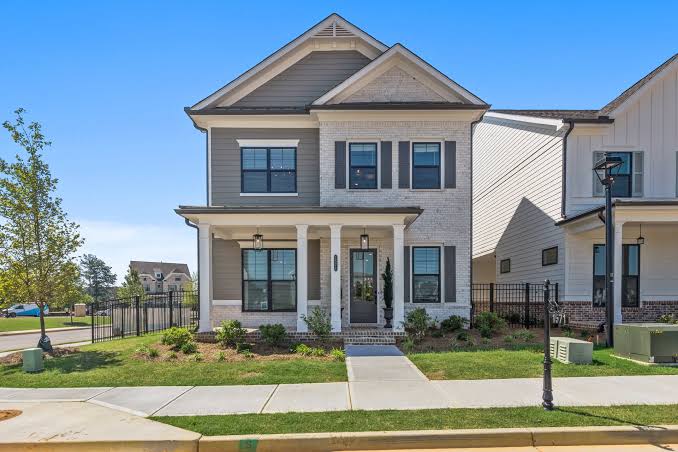
The metro Atlanta region continues to experience steady population growth, driven by a resilient economy, corporate expansions, and a generally favorable climate. As the urban core becomes increasingly dense and land availability shrinks inside the perimeter, the demand for new construction has shifted outward. Homebuyers seeking larger lot sizes, modern floor plans, and highly rated public school districts are focusing their attention on specific suburban submarkets.
Understanding where this expansion is concentrated and the underlying economic factors driving it helps prospective buyers identify areas that offer both immediate lifestyle benefits and long-term property stability.
The Northern Arc: Alpharetta, Milton, and Johns Creek
For over two decades, the northern suburbs of Fulton County have served as the primary benchmark for premium residential development outside the city center.
The Tech Corridor Influence
Alpharetta has transformed from a quiet suburb into a major technology and commercial hub, often referred to as the technology capital of the South. This localized economic strength creates a self-sustaining housing ecosystem. Rather than enduring long commutes into downtown Atlanta, residents work, shop, and live within the same municipal footprint.
Preservation vs. Growth in Milton
Directly adjacent to Alpharetta, the city of Milton offers a starkly different aesthetic. Known for its horse farms and rolling topography, Milton enforces strict zoning laws designed to protect its rural heritage. New construction here typically requires larger minimum lot sizes, often starting at one acre. This zoning approach naturally favors high-end, custom architectural designs rather than dense, tract-style subdivisions.
The Gwinnett and Forsyth Expansion: Suwanee and Cumming
As land prices in North Fulton have escalated, development has pushed aggressively into neighboring Forsyth and Gwinnett counties.
Forsyth County’s Infrastructure Advantage
Cumming and the surrounding Forsyth County area have grown rapidly due to a combination of lower localized tax rates and substantial infrastructure investments. The expansion of Georgia 400 has made commuting manageable, while proximity to Lake Lanier provides a significant recreational draw. Master-planned communities featuring integrated pocket parks, walking trails, and clubhouses are highly prevalent in this corridor.
Suwanee’s Civic Focus
In Gwinnett County, Suwanee has carved out a reputation centered around award-winning civic design and community green spaces. The expansion here emphasizes walkable suburban living, where new residential clusters are purposefully connected to municipal town centers via pedestrian trail networks.
When planning a project in these high-growth corridors, collaborating with seasoned home builders near atlanta ensures that site selection, municipal permitting, and architectural engineering are aligned with the specific zoning requirements of each individual county.
Weighing the Suburbs: Benefits and Local Constraints
Relocating to or building a new home in these emerging suburban markets involves clear operational trade-offs.
The Benefits
- Advanced Building Science: New construction utilizes modern energy-efficient envelopes, variable-speed HVAC zones, and contemporary spatial layouts that older intown properties lack.
- Socioeconomic Infrastructure: These growing regions benefit from newly built public schools, modern medical facilities, and updated utility grids.
- Enhanced Land Allocation: Buyers generally secure significantly more acreage per dollar compared to dense urban plots.
The Limitations
- Commute Volatility: Despite localized job growth, traveling into Atlanta’s urban core during peak hours remains a logistical challenge.
- Dwindling Premium Lots: The rapid pace of development means the most desirable parcels—such as true waterfront or elevated ridge lots are quickly being claimed.
Common Questions Regarding Suburban Atlanta Development
Are utility systems like sewer and natural gas standard in these outlying areas?
Not universally. In more rural pockets of Milton or northern Forsyth County, new construction properties frequently rely on engineered septic systems rather than municipal sewer lines. Confirming utility access during the land-acquisition phase is critical.
How do property tax structures vary across these growth zones?
Tax burdens differ noticeably by county. Forsyth County traditionally offers lower millage rates compared to Fulton and Gwinnett counties, which can result in thousands of dollars in annual savings on a premium property valuation.
