

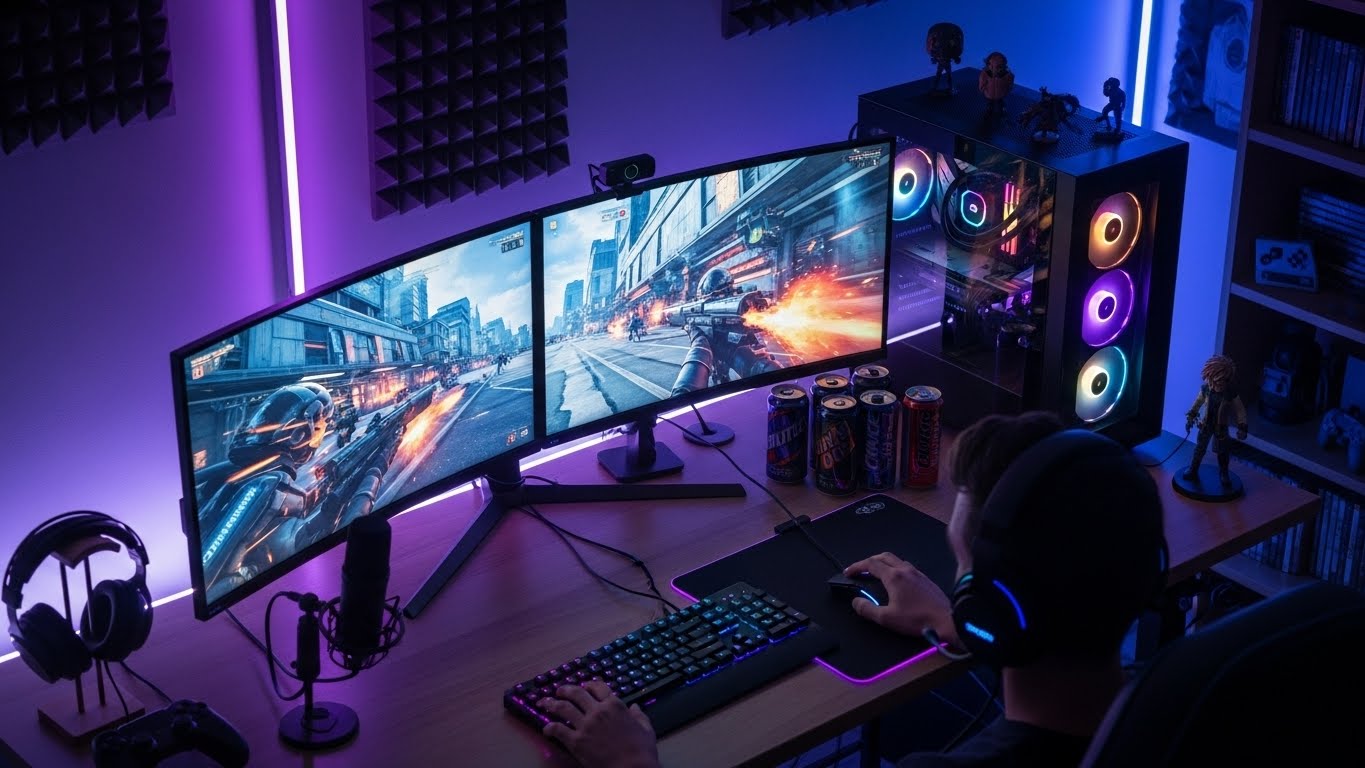
Online slot gacor has become one of the most transformative forces in the entertainment industry. What started as a simple way for players to compete over internet connections has evolved into a global ecosystem that combines technology, communication, competition, creativity, and business. Today, millions of people around the world participate in online gaming through computers, consoles, and mobile devices, making it one of the most influential forms of digital entertainment.
Online gaming is no longer just a pastime. It has become a lifestyle, a profession for some, and a powerful social platform that continues to evolve with technological progress.
The Early Foundations of Online Gaming
Gaming was once a largely isolated experience.
Players typically enjoyed games alone or with friends in the same room through split-screen multiplayer. These experiences were entertaining, but they lacked large-scale interaction and the unpredictability of real global competition.
The introduction of internet connectivity changed everything.
Players gained the ability to interact with others across different locations instantly. Multiplayer gaming shifted from local entertainment to a global experience.
Instead of predictable computer-controlled challenges, gamers faced real people with unique skills, strategies, and personalities.
This dramatically increased engagement and replay value.
Why Online Gaming Became a Global Phenomenon
The success of online gaming did not happen by accident.
Several powerful forces contributed to its rapid growth.
Real-Time Human Interaction
Human players create constantly changing gameplay experiences that remain exciting and unpredictable.
Social Communication
Gaming allows people to connect, collaborate, and build communities across long distances.
Easy Accessibility
Online gaming is available across smartphones, tablets, gaming consoles, and PCs.
Constant Innovation
Developers continuously release updates, new content, seasonal events, and gameplay improvements.
Competitive Motivation
Ranking systems and progression mechanics encourage players to improve and remain engaged.
Together, these factors created one of the most compelling entertainment ecosystems in the world.
Online Gaming as a Social Community
Modern online gaming is deeply social.
Games are no longer isolated products—they are digital gathering spaces.
Players regularly interact through:
- Voice communication
- Text chat
- Team coordination
- Guilds and clans
- Shared missions
- Community events
For many users, gaming is a primary method of staying connected with friends.
Some players log in mainly for social interaction rather than competition itself.
Gaming friendships often become long-term relationships that extend beyond the virtual environment.
This social value is one of the industry’s strongest assets.
The Mobile Gaming Explosion
Mobile gaming dramatically changed online gaming’s accessibility.
Previously, serious gaming often required expensive dedicated hardware. Smartphones removed that barrier completely.
Mobile gaming succeeded because it provides:
- Instant access
- Flexible play sessions
- Free entry points
- Social connectivity
- Broad device availability
This convenience introduced gaming to entirely new audiences.
Competitive mobile titles also demonstrated that sophisticated multiplayer experiences are possible on handheld devices.
This shift helped online gaming become a mainstream global activity.
Competition as a Core Driver
Competition is one of the strongest forces behind online gaming’s popularity.
Players enjoy testing their abilities against real opponents.
Competitive features often include:
- Skill rankings
- Matchmaking systems
- Seasonal progression
- Tournament participation
- Achievement milestones
Human competition creates emotional intensity because every opponent presents a different challenge.
Many players become deeply invested in skill development and performance improvement.
This creates strong long-term engagement.
The Growth of Esports
Esports transformed gaming into professional entertainment.
Competitive gaming tournaments now attract massive global audiences, corporate sponsorships, and commercial investment.
Professional esports ecosystems include:
- Elite players
- Coaches
- Analysts
- Broadcasters
- Event organizers
- Production teams
- Brand sponsors
Top players train with discipline comparable to traditional athletes.
Esports has changed gaming’s public image, turning competitive play into a respected professional industry.
Streaming and Gaming Entertainment
Online gaming also became a major entertainment content category.
Millions of viewers watch gaming content every day through streaming platforms and digital video channels.
Popular formats include:
- Live gameplay broadcasts
- Competitive tournaments
- Strategy tutorials
- Reviews
- Challenge content
- Personality-driven entertainment
Gaming creators often build strong personal brands and loyal communities.
Revenue opportunities include:
- Sponsorships
- Advertising
- Viewer support
- Membership subscriptions
- Merchandise
Gaming is now both participatory and spectator entertainment.
Technology Behind Modern Gaming
Technological advancement continues driving online gaming forward.
High-Speed Internet
Improved connectivity reduces lag and improves competitive responsiveness.
Advanced Hardware
Modern gaming systems deliver smoother visuals and stronger performance.
Cloud Gaming
Streaming technology reduces the need for expensive gaming hardware.
Artificial Intelligence
AI improves matchmaking, anti-cheat systems, moderation, and adaptive content.
Cross-Platform Play
Players increasingly connect regardless of hardware preference.
Innovation continues expanding possibilities.
Challenges Facing Online Gaming
Despite its strengths, online gaming faces several ongoing challenges.
Toxic Behavior
Competitive pressure can sometimes encourage harassment or hostility.
Security Risks
Players may encounter phishing attempts, hacked accounts, or scam activity.
Monetization Concerns
Aggressive in-game purchasing models can frustrate users.
Fairness Issues
Cheating tools can undermine competitive trust.
Lifestyle Balance
Excessive gaming without moderation may affect health or productivity.
Developers continue working toward solutions.
Educational and Cognitive Benefits
Online gaming can also strengthen valuable real-world skills.
Players often develop:
- Strategic planning
- Fast decision-making
- Leadership
- Communication
- Teamwork
- Adaptability
- Resource management
- Problem-solving
Collaborative games especially reinforce coordination under pressure.
These benefits help explain gaming’s broader acceptance.
The Future of Online Gaming
Online gaming’s future appears highly exciting.
Emerging trends include:
Virtual Reality Multiplayer
More immersive shared digital experiences.
AI-Driven Adaptive Worlds
Smarter games that respond dynamically to players.
Persistent Online Communities
Deeper social virtual ecosystems.
Better Mobile Performance
Continued smartphone gaming advancement.
Inclusive Accessibility
Broader participation through improved design.
The future remains full of innovation.
Conclusion
Online depo 5k has become one of the defining entertainment revolutions of the digital age. It combines competition, technology, creativity, social interaction, and business into a constantly evolving global phenomenon.
As connectivity improves and innovation accelerates, online gaming will remain at the center of interactive digital entertainment for years to come.
