

Introduction
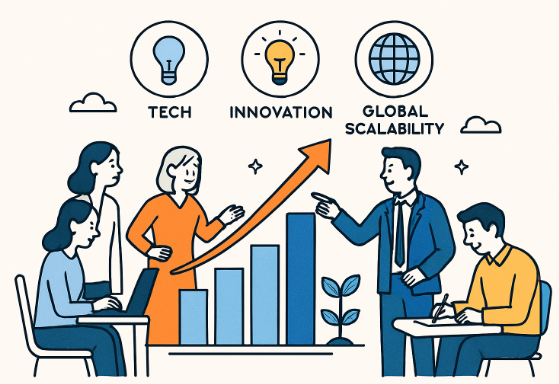
Rapid technological advancement and global competition are changing the way companies think about expanding their products. For modern businesses, the challenge is no longer just developing innovative solutions but also scaling those innovations effectively across diverse markets. Achieving this means developing strategic processes that address both internal and external obstacles, while leveraging specialized partnerships, such as nearshore software development, to adapt and scale with precision quickly.
The pressure to bring products to market faster—without sacrificing quality—demands an agile approach. This requires not only a clear understanding of customer needs and market trends but also the ability to deploy advanced tools and techniques. Organizational agility and flexibility become the foundations on which sustainable product innovation and growth rely.
Modern businesses must also foster a mindset of continuous improvement at every level, from executive leadership to frontline teams. Encouraging collaboration, knowledge sharing, and a willingness to experiment with new ideas drives both efficiency and creative breakthroughs. As these dynamics become increasingly critical, so does the need for companies to integrate emerging technologies into their core business strategies.
Developing scalable products means keeping customer-centricity at the forefront, investing in reliable supply chains, and effectively managing resources to ensure optimal performance. These actions enable organizations to remain resilient, responsive, and capitalize on market opportunities more quickly than their competitors.
Understanding the Challenges of Scaling Innovation
Scaling product innovation often exposes businesses to a host of obstacles that can slow growth or stall momentum entirely. One core challenge is a lack of in-depth market knowledge—an issue that can result in poorly aligned features or ineffective messaging that fail to resonate with target audiences. Working closely with market data, regularly updating customer research, and validating assumptions are critical steps in avoiding these pitfalls.
- Lack of Market Understanding: Companies that don’t continuously monitor industry trends risk launching outdated or misaligned offerings. Maintaining a strong, data-driven market perspective enables businesses to anticipate and respond effectively to shifts in consumer behavior.
- Ineffective Demand Forecasting: Companies often stumble by either overestimating or underestimating product demand, leading to costly inventory issues or lost revenue opportunities. Leveraging comprehensive sales and behavioral analytics provides more accurate projections.
- Poor Resource Allocation: Effective scaling means putting the right resources in the right place at the right time. Misallocations, whether caused by outdated processes or inadequate communication, can hinder market entry and negatively impact overall profitability.
Addressing these challenges head-on requires disciplined processes and the innovative use of available technology, ensuring that innovation is both scalable and sustainable in the long term.
Leveraging Technology and AI for Scalability
Artificial Intelligence (AI) and automation technologies are revolutionizing the way organizations scale product innovation. According to a report by TechRadar, big businesses are navigating complex rollouts of Generative AI, facing challenges such as slow ROI, poor data quality, and unclear use cases. These technologies help companies to process massive data sets, identify subtle patterns, and automate decision-making at scale.
Small and medium-sized enterprises (SMEs) are particularly benefiting from AI, as it enables them to streamline processes, cut operational costs, and accelerate time-to-market. Recent studies indicate that up to 91% of AI-empowered SMEs have experienced direct revenue increases, with reductions in operational expenses as high as 30%. This level of efficiency gives smaller companies the agility to compete against much larger rivals.
In practice, scalable technology also encompasses the integration of cloud-based infrastructure, real-time analytics, and collaboration platforms. By leveraging these tools, organizations improve coordination between development, marketing, and support teams, ensuring product launches are both rapid and reliable.
Effective Resource Allocation and Demand Forecasting
Predicting demand accurately and allocating resources efficiently are at the heart of scalable innovation. Companies must harness advanced analytics to interpret evolving market signals and customer behaviors.
- Deploy real-time analytics platforms to track key performance indicators and dynamically adapt strategies.
- Establish flexible supply chains that can respond quickly to market fluctuations and minimize wasted resources.
- Invest in machine learning models for more comprehensive and accurate demand forecasts, minimizing guesswork.
- Develop close partnerships with suppliers and logistics providers to ensure fast, reliable delivery and quick pivots when demand patterns change.
These efforts enable businesses to optimize operational efficiency, minimize costs, and maintain agility in rapidly evolving markets.
Fostering a Culture of Innovation
A culture that encourages experimentation, cross-team collaboration, and continuous learning is vital to scaling product innovation. Creating such an environment begins with adopting methodologies like design thinking and agile frameworks, which empower teams to iterate quickly and learn from real-world user feedback.
- Implement agile and design thinking principles to foster creativity and adaptability.
- Promote open communication and collaborative problem-solving across all departments.
- Encourage ongoing professional development and continuous education to stay current with market and technological trends.
- Recognize and reward innovative ideas and risk-taking to keep teams motivated and invested in the company’s long-term vision.
As innovation flourishes, teams aren’t just more productive—they’re actively invested in the enterprise’s success, driving greater buy-in and momentum at every level.
Conclusion
The challenge of scaling product innovation requires a forward-thinking mindset, seamless use of advanced technologies, and a robust, adaptable organizational culture. By addressing the inherent obstacles of innovation, leveraging cutting-edge AI and data analytics, efficiently managing demand and resources, and fostering a collaborative and experimental culture, modern businesses can deliver sustained growth—and stay ahead in the competitive, digital-first landscape.
