

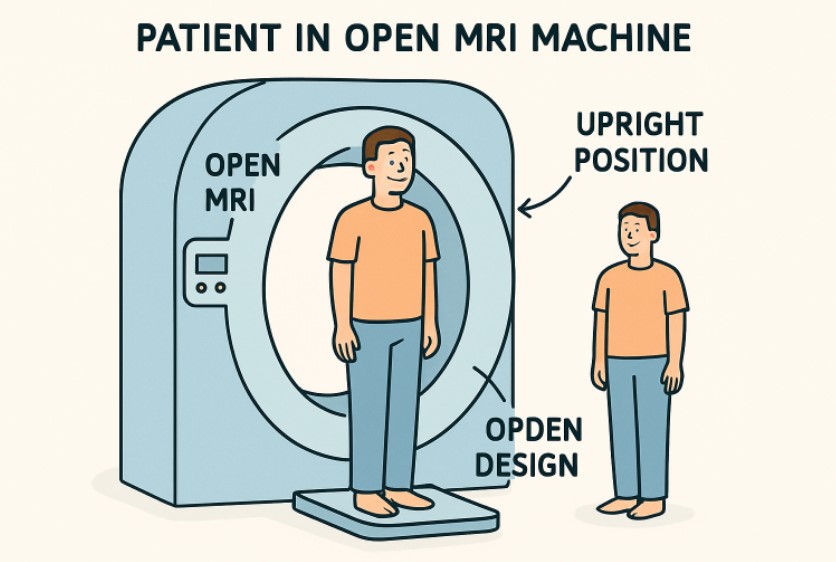
Medical imaging stands at the forefront of modern diagnostics, playing a pivotal role in the early detection and management of countless conditions. While traditional MRI systems have provided detailed internal images for decades, their design often forces patients into uncomfortable, supine positions—posing challenges for individuals struggling with anxiety, pain, or restricted mobility. These limitations have driven technological progress, giving rise to upright MRI systems that allow scanning in natural, weight-bearing stances, transforming both the patient experience and clinical outcomes. For those seeking a comfortable and accessible MRI experience in the Midwest, a standing MRI Chicago option makes advanced diagnostics readily available to more people.
Upright MRI technology reimagines how images are captured, addressing common issues such as claustrophobia, patient discomfort, and limitations related to body type or mobility. By producing high-quality scans while patients stand, sit, or even move, these systems pave the way for more accurate diagnoses and compassionate care. The visible difference between upright and traditional MRI methodologies isn’t just theoretical—numerous studies now demonstrate the substantial benefits of this game-changing approach in various fields of medicine.
Enhanced Patient Comfort
Conventional MRIs typically require patients to lie motionless in a narrow tube, a process that can take 30 minutes or longer. This configuration often leads to discomfort, particularly among individuals with chronic pain or limited mobility. Upright MRI systems provide scanning in standing, sitting, or partially reclined positions, dramatically reducing physical strain and discomfort.
Research published in the Journal of Magnetic Resonance Imaging indicates that upright MRIs result in fewer procedures needing sedation or premature termination. These findings not only increase patient satisfaction but also ensure scans are completed faster and more efficiently, without compromising image quality.
Improved Diagnostic Accuracy
Aside from patient comfort, upright MRI offers a genuine leap in diagnostic capability. When patients are imaged in weight-bearing or functional postures, clinicians can often detect spinal, orthopedic, and neurological conditions that remain hidden during supine scans. For example, certain herniated discs or joint instabilities only manifest under physiological loads—meaning upright MRIs uncover symptoms that would otherwise go undiagnosed.
Accurate imaging while the body is under natural stress enables physicians to create more tailored and effective treatment plans. This realism in scanning environments enhances the sensitivity and specificity of findings, allowing the targeting of interventions and the monitoring of progress with unprecedented precisi
Accommodating Diverse Patient Populations
Traditional MRI technology may not be suitable for all patients. Individuals with obesity or severe kyphosis are sometimes unable to fit comfortably (or at all) inside standard MRI bore sizes. Upright MRI addresses this issue with open architectures, enabling access for a wider range of body types, including children, seniors, and individuals with disabilities. This inclusive approach ensures that diagnostic imaging is not withheld from those who need it most, making care equitable and accessible for broader populations. Open MRI facilities can also make accommodations for caregivers to stay nearby, adding further comfort for pediatric or anxious patients.
Reduced Claustrophobia
Claustrophobia affects up to 13% of all patients referred for conventional MRI, often leading to canceled or incomplete scans and the need for sedatives. Open upright MRI machines minimize this issue by creating less confining environments, significantly decreasing claustrophobia-induced distress. In practice, this results in substantially fewer scan interruptions and dramatically increases the rate at which high-risk patients can complete critical imaging, as referenced in recent data published by PubMed.
Cost-Effectiveness
Health systems are continually challenged to strike a balance between advanced technology and operational efficiency. While upright MRI devices may require a larger upfront investment, long-term gains include higher throughput, less need for sedation, and fewer repeat scans due to patient movement or incomplete imaging. These operational benefits can lead to overall reductions in healthcare costs, faster patient turnaround times, and increased capacity for clinics. This investment yields dividends in both improved care quality and enhanced financial performance.
Technological Advancements
Recent innovations have led not only to the development of upright and open MRI formats but also to advancements in portability and modular installation. Companies have designed portable MRI systems that can be deployed in smaller clinics and rural settings without the infrastructure overhaul typically associated with high-end imaging equipment. This mobility addresses healthcare disparities, bringing state-of-the-art diagnostics directly to communities that previously lacked access to high-quality imaging.
Clinical Applications
Upright MRI technology is transforming practice, particularly in neurology and orthopedics. Imaging the brain while upright can illuminate issues like cerebrospinal fluid flow or Chiari malformation—disorders where symptoms are position-dependent. In orthopedics, evaluating spine alignment, joint integrity, or meniscal tears under load gives unprecedented insight into pathology and injury. These clinical advantages lead to earlier interventions, improved surgical planning, and more accurate assessment of therapeutic outcomes.
Conclusion
Upright MRI technology is an innovation poised to redefine patient-centered diagnostic imaging. By enhancing comfort, improving diagnostic accuracy, and expanding accessibility, it closes long-standing gaps in care for vulnerable and diverse populations. As more healthcare providers adopt these advanced systems, upright MRI is set to become an integral part of the future of medical imaging, delivering compassionate and precise care to all who need it.
