

Backflush Costing is a simplified accounting method that calculates the costs of completed projects or products at the end of the process. Instead of tracking costs at every production stage, Backflush Costing defers cost calculations until the project is finished. This method is commonly used in manufacturing, engineering projects, and R&D activities, particularly in environments with mass production or standardized processes. By applying Backflush Costing, businesses can more easily allocate expenses, streamline cost accounting, and better plan for future projects.
Steps of Backflush Costing
Backflush Costing involves several essential steps that allow businesses to accurately calculate the costs of completed projects or products:
- Data Collection
Gather all actual cost data related to the project, including direct costs (such as materials and labor) and indirect costs (like equipment depreciation and administrative expenses). These data are typically derived from invoices, accounting records, reports, and other relevant documents. - Identify Cost Elements
Determine the cost elements involved in the project, separating direct costs from indirect costs. Direct costs are directly linked to the project (e.g., raw materials), while indirect costs are shared across multiple areas, such as office overhead or general equipment expenses. - Allocate Costs
Using predefined criteria, such as time or workload, allocate the gathered cost data across the relevant parts of the project or product. - Calculate Backflush Costs
Once all cost data have been allocated, the final step is to calculate the total cost of the completed project. This provides an overall view of project expenditures and aids in financial analysis, decision-making, and control.
Where is Backflush Costing Used?
Backflush Costing is commonly applied in several areas:
- Engineering and Construction Projects: These projects often have clear timelines and budget controls. Backflush Costing helps assess the total costs after completion, enabling better planning for future initiatives.
- R&D Projects: In research and development, where work is often done in stages, Backflush Costing allows businesses to evaluate the cost-effectiveness of completed phases and plan new ventures.
- Batch Production: This method is ideal for large-scale, repetitive production environments, where cost tracking at each step would be time-consuming and unnecessary.
Key Characteristics of Backflush Costing
Backflush Costing stands out from traditional costing methods due to its distinct features:
- No Need for Step-by-Step Costing
Unlike traditional methods that track expenses for each production phase, Backflush Costing postpones all cost calculations until the project or product is finished, making it more straightforward and time-efficient. - Production-Based Cost Allocation
Costs are allocated to products after they are completed, based on the production volume or cycle. The cost allocation relies on predetermined standard costs, calculated before production begins. - Preset Standard Costs
Backflush Costing depends on the use of standard costs, which are estimates established before production. These estimates include material, labor, and overhead costs, providing a baseline for later cost allocation. - Ideal for Repetitive Production
This method works best in settings with stable production processes and standardized products. In such environments, Backflush Costing streamlines cost tracking, making it more efficient than traditional costing methods. - Simplified Record-Keeping and Reporting
Because it eliminates the need for tracking each production step, Backflush Costing simplifies record-keeping and reduces the workload of financial reporting, improving overall efficiency. - Automation-Friendly
Modern Backflush Costing systems often integrate with automated tools, such as Enterprise Resource Planning (ERP) software. These tools can automatically track production quantities, calculate standard costs, and distribute costs to completed products, reducing human error and increasing accuracy.
Advantages and Limitations of Backflush Costing
Advantages
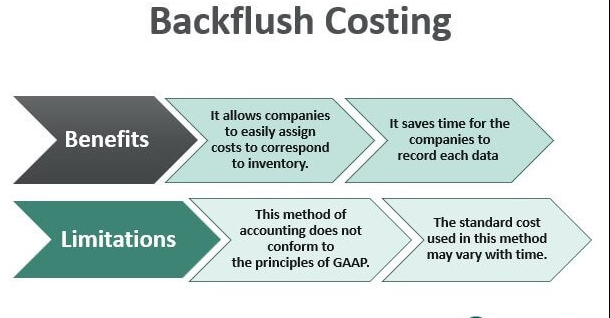
One of the main advantages of Backflush Costing is the simplification of the costing process, especially in environments with large-scale or standardized production. By reducing the need for detailed tracking, businesses can quickly allocate costs to completed products and enhance operational efficiency. Additionally, using preset standard costs enables faster financial reporting and better cost control.
Limitations
However, Backflush Costing also comes with some limitations. The accuracy of the method relies heavily on the correctness of the standard costs set at the beginning. If these estimates are significantly off from actual costs, the final calculations may be misleading. Additionally, for smaller or non-standardized projects, Backflush Costing may not be suitable, as such projects typically require more detailed cost tracking.
When is Backflush Costing Applicable?
Backflush Costing is most effective under specific conditions:
- Stable Production Processes: The method is highly effective in environments where production flows are stable and predictable, ensuring the standard costs align with actual production costs.
- Large-Scale or Repetitive Production: For industries like automotive manufacturing or electronics assembly, where products are produced in large volumes, Backflush Costing helps simplify cost allocation and reporting.
- Accurate Standard Cost Estimates: To achieve accurate cost calculations, businesses must ensure that the standard costs set before production closely match actual expenses. This prevents significant variances at the project’s end.
Conclusion
Backflush Costing is a streamlined approach to cost accounting, particularly suited for batch production and standardized environments. By deferring cost calculations until the completion of the production cycle, businesses can reduce administrative burdens and improve the speed of cost allocation. However, it is crucial to ensure the accuracy of standard cost estimates and recognize that this method may not be ideal for all project types, especially those requiring detailed cost tracking.
FAQs about Backflush Costing
1. What industries benefit the most from Backflush Costing?
Backflush Costing is most beneficial for industries with large-scale, repetitive production, such as manufacturing, electronics, and automotive. It helps these industries manage costs more efficiently by focusing on the final product rather than individual process stages.
2. How does Backflush Costing simplify the accounting process?
By deferring cost calculations until the completion of a project or product, Backflush Costing eliminates the need for detailed tracking at every step, reducing administrative workload and improving reporting speed.
3. Can Backflush Costing be used for small-scale projects?
Backflush Costing is less suitable for small-scale or highly customized projects because it relies on standard cost estimates and does not provide the detailed cost tracking often required in these environments.
4. What are standard costs, and why are they important in Backflush Costing?
Standard costs are estimated costs set before production begins, covering materials, labor, and overhead. They are critical in Backflush Costing because they serve as the baseline for cost allocation once the project or product is complete.
5. How does automation support Backflush Costing?
Automation, through systems like ERP software, streamlines the process of tracking production volumes and calculating costs, allowing for accurate and efficient cost allocation with minimal manual intervention.
6. What are the risks of using Backflush Costing?
The main risk is relying too heavily on inaccurate standard cost estimates. If these estimates differ significantly from actual costs, the final cost calculations may not reflect the true expenses, leading to financial discrepancies.
