

Every interaction with a consumer tells a story and contributes to the bigger picture that characterizes a company’s success. But how often do those stories remain scattered, lost in the vast ocean due to disconnected data? This problem arises not just in acquiring the data but also in integrating it into a seamless narrative that drives strategic decisions. It’s essential for every business to connect the dots between the collected customer information and deriving strategic choices.
To counter the above challenge, the journey from fragmented data to a unified customer view can become easy when customer data integration comes into play by supporting the business to gain better customer insights and fuel growth. To gain better insights related to CDI, this blog will provide you with the types of CDI and best practices for your business.
About Customer Data Integration (CDI)
Customer Data Integration (CDI) is a procedure that combines data from multiple sources, including marketing, sales, customer support, and other channels, to achieve a unified, consistent, and accurate perspective of the customer. Due to this unified point of view, retailers can better comprehend consumer interactions, preferences, and behaviors across various touchpoints.
By integrating these numerous data points, retailers can gain a full 360-degree view of their customers, providing them with more accurate insights and enabling them to make better decisions.
A Quick View of the Customer Data Integration Process
The Customer Data Integration (CDI) process involves five key steps to ensure that your data is accurate, consistent, and reliable enough to make decisions by adding value.
- Data Extraction: The first stage involves collecting data from various sources, including social media platforms, CRM programs, and customer interactions. The entire process is based on this fundamental data.
- Data Merging: After the data is extracted from several sources, it is combined to create unified data sets. This phase offers a thorough picture of every consumer by removing duplicates and ensuring consistency.
- Data Cleaning: For accurate analysis, clean data is essential. That can be obtained through data cleaning. This stage entails locating and fixing errors, eliminating inconsistencies, and standardizing data to ensure accuracy and dependability.
- Data Storage: After the data has been merged and cleansed, it is stored in a secure environment, such as a data warehouse or cloud-based storage, where it is easy to access for analysis.
- Data Analysis: This is the final step, which supports analyzing the integrated data to uncover insights that can drive business decisions. This analysis helps in trend prediction, personalizing customer experiences, and their behavior comprehension.
Types of Customer Data Integration
Customer Data Integration (CDI) can be achieved through three main data integration techniques, each serving a unique purpose in managing and utilizing customer data effectively. Let’s delve into these approaches:
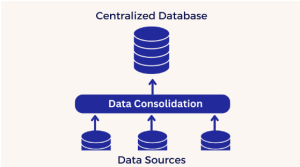
1. Data Consolidation
Companies that centralize data from several sources into a single system will better understand client behavior. This will also improve personalized interactions and predictive analytics. In addition to facilitating effective decision-making, this simplified data management approach will enable businesses to maintain an advantage in a cutthroat market by enabling real-time insights.
2. Data Propagation
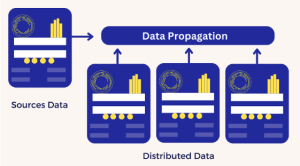
This strategy effectively distributes consumer data across numerous platforms, allowing businesses to retain synchronized and correct information in real-time. As the system evolves, instant data availability becomes increasingly important. Through data propagation, if a customer adds or updates any small or big detail in one system, it will also be updated in other systems, like marketing databases or customer service platforms.
Despite concerns about potential data redundancy, the benefits of instant updates across all systems will far outweigh the drawbacks, which indirectly makes it an essential practice in data integration.
3. Data Federation
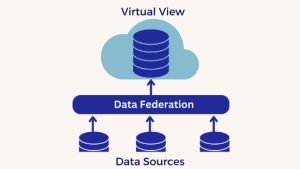
Data federation is a virtual layer for accessing and querying data across many sources, enabling businesses to connect diverse data streams without physically relocating them. This approach is crucial for companies that require agility since it provides quick insights while consuming the minimum resources possible. This strategy will be essential by 2025 for businesses that need quick insights while saving money on storage.
Best Practices of customer Data integration
The following are the most effective methods for addressing the difficulties that businesses usually encounter:
1. Managing Data Quality
A smooth customer data integration process will depend on maintaining data consistency and reliability, leading to trustworthy insights and well-informed decision-making. To support and manage data quality, regular data cleaning, validation checking, and standardized data entry protocols are necessary to ensure the accuracy and consistency of data.
2. Integrated Platforms
Leverage customer data solutions that effortlessly combine data from several sources. These data systems can integrate customer information into a single, cohesive database. This strategy will allow businesses to provide individualized experiences, increasing customer satisfaction and loyalty.
3. Data Mapping and Transformation
Utilize data mapping and transformation techniques to bring multiple data sets into a unified format that makes them easy to integrate and analyze. As these technologies evolve, they promise to reduce manual errors and accelerate the integration process, paving the way for more agile and responsive data strategies.
Conclusion
Transforming scattered customer data into a unified narrative is critical to driving strategic decisions and business growth. Enterprises can obtain a comprehensive customer picture and acquire valuable insights through efficient data integration methods such as consolidation, propagation, and federation. This process is further improved by emphasizing data quality, utilizing integrated platforms, and applying mapping and transformation tools.
Many organizations aim to harness the benefits of customer data integration efficiently, and now you are also aware about the benefits. So why delay in the better deployment of customer data integration that your business deserves? The best solution is to hire data scientists skilled in implementing the support for the business by providing the expertise needed to navigate and leverage these integration techniques. Adopting these procedures will pave the way for a more responsive and connected business atmosphere.
