

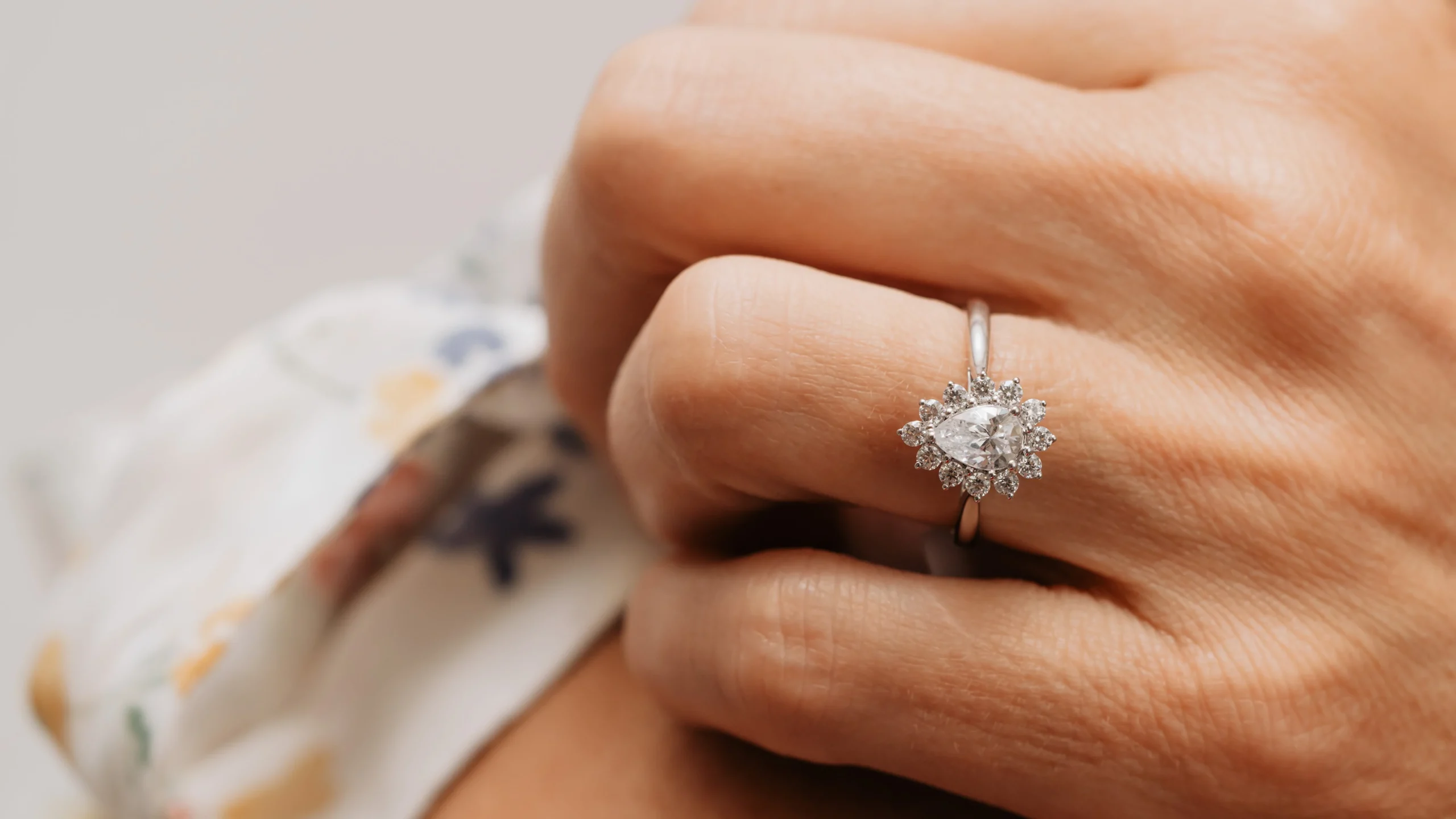
Shopping for the right lab-grown diamond for your hidden halo ring is an exciting prospect, but it can also be a bit overwhelming. After all, lab-grown diamonds are more than just a sustainable choice—they offer exceptional value for money. But to ensure your hidden halo ring shines bright, you need to know how to spot the best options. Here’s everything you need to know.
Understanding the 4 Cs
Grading lab-grown diamonds follow the same 4 Cs (cut, color, clarity, and carat weight) as natural diamonds. Together, these factors determine the quality and appeal of the diamond.
Cut
Perhaps the most important factor, besides the color of the diamond, is the cut. A well-cut diamond refracts light beautifully and will have the most sparkle. When looking for a hidden halo lab diamond engagement ring, where a halo of small diamonds surrounds your center stone, ensure that you get an excellent cut grade. This will ensure maximum light return and sparkle, making your ring stand out.
Color
Lab-grown diamonds can be found in a vast range of colors, from colorless to faint yellow. The less color a diamond exhibits, the better quality it is. If you are going for a hidden halo setting and the surrounding stones are going to accentuate the color, go for a diamond with a color grade of D-F. These grades are colorless and will appear whiter than the setting, making your ring look glittery.
Clarity
Clarity refers to inclusions (internal imperfections) and blemishes (external imperfections). Since most lab-grown diamonds are grown in an environment completely controlled by the manufacturer, they contain fewer inclusions than natural diamonds. For your hidden halo ring, look for a clarity grading of VS1 (Very Slightly Included 1) or higher.
A VS1 or higher diamond is considered eye-clean, meaning that any imperfections are too small to be seen by the naked eye and will not detract from the overall beauty of the stone.
Carat Weight
The carat weight of a diamond refers to its size, and the best way to get the best size with the other three Cs is to find a way to balance them out. The hidden halo setting is sized to make the center stone appear larger, so a slightly smaller carat weight won’t matter so much.
Certification and Authentication
Ensure your lab-grown diamond comes with a grading report from a reputable institute like the International Gemological Institute (IGI) or Gemological Institute of America (GIA). This guarantees that your diamond is of the highest quality and is, indeed, a diamond.
Wrapping Up
If you opt for a lab-grown diamond hidden halo ring, it’s in your best interest to remember the 4 Cs and ensure your diamond is certified. Stick to your guns on the cut, color, clarity, and carat weight and you will get a pristine stone that fits your budget, shines like a million bucks, and looks every inch the high-quality diamond that it is.
Whether it’s the sustainable factor that draws you to lab created diamond engagement rings or their superior quality, you can’t go wrong in either case. Good luck with your lab diamond hunt.
