

A bed frame is more than just a piece of furniture; it is the foundation of your bed, providing support for your mattress and ensuring a good night’s sleep. When choosing a bed frame, durability is a key factor to consider, as a well-made frame can last for years, even decades.
With various materials available, each offering different levels of strength, stability, and longevity, selecting the best material for a durable bed frame can be challenging. Choosing bed frames by Isaak ensures a combination of style, durability, and comfort, making it a smart choice for anyone looking to enhance their bedroom setup. With the help of this guide, you can make an informed decision.
1. Solid Wood Bed Frames
Solid wood is one of the most traditional and durable materials used for B2C Furniture’s bed frames. It offers a timeless appeal, blending seamlessly with various interior design styles.
Advantages:
- Strength and Stability: Strong bed frames made of solid wood are well-known. Hardwoods like oak, maple, and walnut are particularly strong, capable of supporting heavy mattresses and sleepers without warping or sagging over time.
- Longevity: A well-maintained solid wood bed frame can last for decades. The natural resilience of wood makes it resistant to wear and tear, and minor damages can often be repaired or refinished.
- Aesthetic Appeal: Solid wood frames offer a natural and warm look that enhances the overall aesthetic of a bedroom. The variety of wood types and finishes available allows for customization to match personal taste.
Considerations:
- Cost: Solid wood frames tend to be more expensive than those made from other materials. However, the investment is often worth it due to their durability and long lifespan.
- Weight: Solid wood bed frames can be heavy, making them more challenging to move. This may be a consideration if you frequently rearrange your bedroom or move homes.
2. Metal Bed Frames
Metal bed frames have become increasingly popular due to their modern look and exceptional durability. They are frequently constructed of iron or steel.
Advantages:
- Durability: Metal bed frames are incredibly strong and resistant to damage. Steel and iron frames can easily support heavy loads, making them ideal for individuals or couples who require additional support.
- Low Maintenance: Metal frames are easy to clean and require little maintenance. They are resistant to pests such as termites, which can be a concern with wooden frames.
- Versatility: Metal frames come in various styles, from minimalist designs to ornate, decorative options. This versatility allows them to complement both contemporary and traditional bedroom decor.
Considerations:
- Cold Feel: Some people find metal bed frames to be less warm and inviting compared to wood. However, this can often be mitigated with the right bedding and decor.
- Noise: Metal bed frames can sometimes be noisier than wooden ones, particularly if they are not assembled correctly. Ensuring all joints are tightened and secure can help reduce noise.
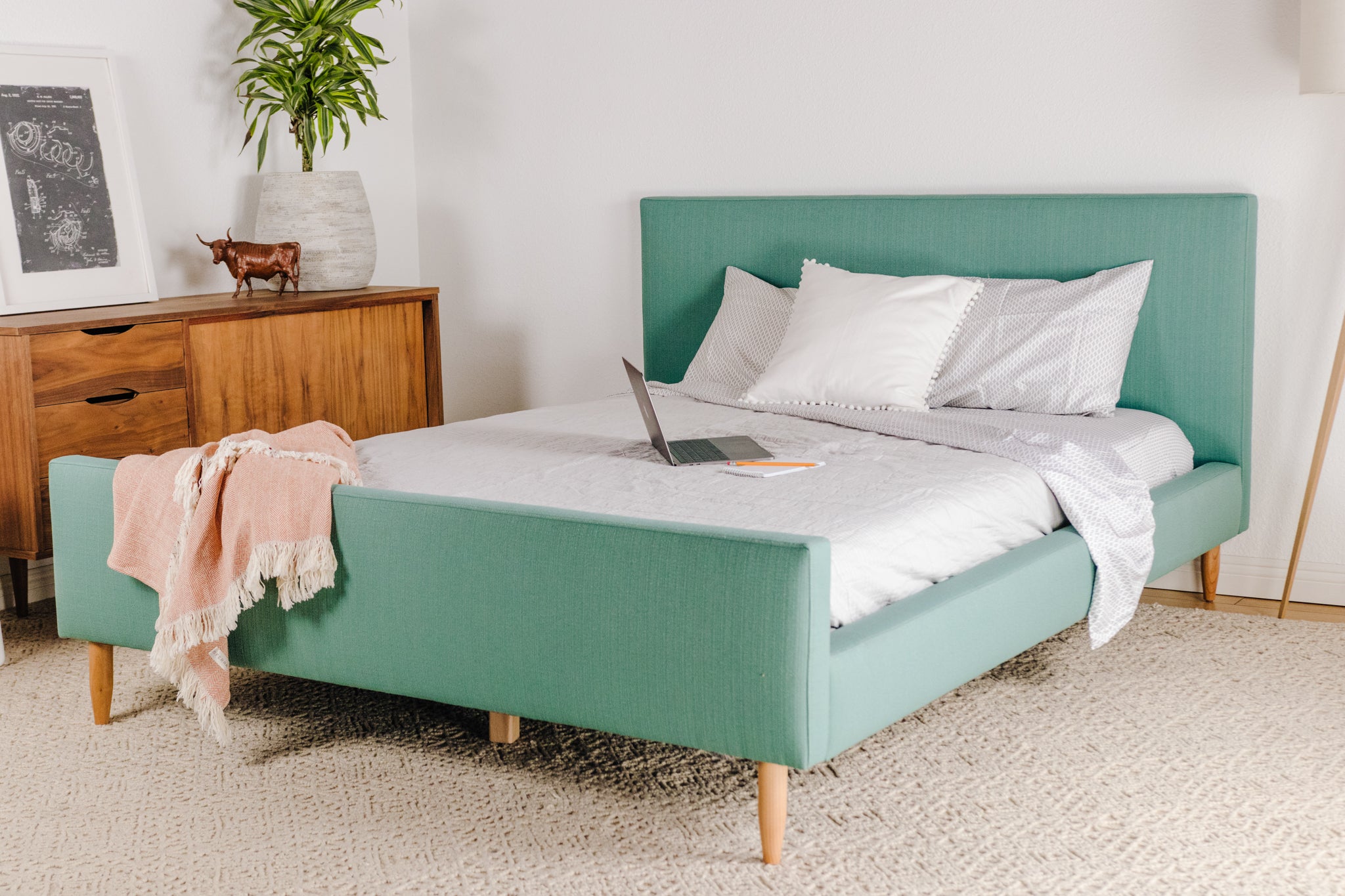
3. Upholstered Bed Frames
Bedrooms with upholstered bed frames seem more opulent and cozy. These frames are typically constructed from wood or metal and then covered with fabric, leather, or faux leather.
Advantages:
- Comfort: The padded upholstery provides a softer surface, which can make the bed frame more comfortable to lean against when sitting up in bed.
- Aesthetic Versatility: Upholstered frames offer a wide range of design options, with various colors, fabrics, and patterns available. This makes them a great choice for those looking to match their bed frame with specific bedroom decor.
- Sound Absorption: Upholstered bed frames tend to be quieter than metal or wood frames, as the fabric absorbs sound, reducing creaks and squeaks.
Considerations:
- Maintenance: Upholstered frames may require more maintenance to keep them looking their best. Fabric can stain and wear over time, and some materials may attract dust or pet hair.
- Durability: While the underlying frame (wood or metal) may be durable, the upholstery itself can show signs of wear more quickly, especially in high-contact areas.
4. Engineered Wood Bed Frames
Engineered wood, such as plywood or MDF (medium-density fiberboard), is another material option for bed frames. These substances are frequently employed as less expensive substitutes for actual wood.
Advantages:
- Affordability: Engineered wood bed frames are typically less expensive than those made from solid wood, making them a budget-friendly option.
- Lightweight: These frames are lighter than solid wood, making them easier to move and assemble.
- Eco-Friendly: Engineered wood is often made from recycled wood fibers, making it a more sustainable option compared to solid wood.
Considerations:
- Durability: While engineered wood can be strong, it is generally less durable than solid wood or metal. It may be more prone to damage, such as chipping or cracking, and may not last as long.
- Moisture Sensitivity: Engineered wood can be sensitive to moisture, leading to swelling or warping if exposed to high humidity or liquids.
Choose the Best Material for a Durable Bed Frame
When it comes to choosing the best material for a durable bed frame, solid wood and metal are the top contenders due to their strength, longevity, and reliability. Solid wood frames offer a timeless, warm aesthetic and can last for decades with proper care, while metal frames provide exceptional durability and require minimal maintenance.
Upholstered bed frames add comfort and style, though they may require more upkeep, and engineered wood frames offer a budget-friendly alternative with decent durability. Ultimately, the best material for your bed frame will depend on your specific needs, preferences, and budget. By considering the advantages and limitations of each material, you can select a bed frame that provides both the durability and style you desire.
