

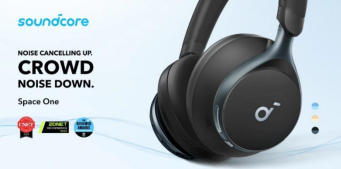
Understanding the distinctions between passive and active noise cancellation is critical for making an educated selection when purchasing noise-canceling headphones. Both approaches attempt to eliminate unwanted noise, although they do this in different ways. Knowing these distinctions may help you choose the finest headphones for your requirements, particularly when considering possibilities such as soundcore’s offers.
Key Differences: Passive vs. Active Noise Cancellation
Active and passive noise-cancelling headphones are the two varieties available. Each has its own set of features and advantages, which we shall discuss in further detail below.
Mechanics of Passive Noise Cancellation
By physically shielding noises from the outside world, passive noise cancellation is able to function. The design and construction of the headphones, which include characteristics like substantial cushioning and secure ear cups that form a seal around your ears, are responsible for accomplishing this goal. Noise from the surrounding environment is absorbed and deflected by these materials, preventing it from reaching your ears. Considering that it does not need any power to work, passive noise canceling is constantly active. This makes it a dependable option for travelers who do not want to be concerned about the amount of time their battery will really last. The efficacy of the headphones, on the other hand, is mostly dependent on the quality of the design and the fit of the headphones, which might differ from model to model.
Active Noise Cancellation Technology
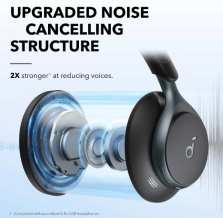
The term “active noise cancellation” (ANC) refers to the use of cutting-edge technologies to eliminate ambient noise. The microphones that are incorporated into these headphones are able to take up noise from the environment and then create sound waves that are the exact opposite of the noise you are hearing (anti-phase) in order to cancel it out. In order for this process to go successfully, it is necessary to have a source of power, which is often a battery that can be recharged. With adaptive noise cancellation, for instance, Soundcore’s Space One headphones are able to suppress noise by as much as 98%. This makes them an excellent choice for places that are characterized by low-frequency disturbances that are present all the time, such as jet engines or busy streets. The use of this technology makes it possible to have a more peaceful and deep listening experience.
Effectiveness Comparison
Active noise cancellation is often more successful than passive noise cancellation, particularly when it comes to reducing low-frequency disturbances that are uniform in nature, such as engine hums. The amount of silence that passive noise cancellation offers is not comparable to that of active noise cancellation (ANC), although it may be beneficial for high-frequency disturbances. The ability of active noise cancellation to adjust to varying noise situations enables it to provide a more complete measure of noise reduction. The active kinds of headphones, such as those manufactured by soundcore, are often favored by those who are looking for the finest noise-canceling headphones because of their increased noise-reduction capabilities. A balanced approach to noise reduction is provided by high-end models that include active and passive noise cancellation. This method is able to accommodate a wide variety of noise kinds.
Impact on Battery Life
Because passive noise-canceling headphones do not need electricity, there is no need to be concerned about their battery life. Active noise-canceling headphones, on the other hand, need battery power in order to complete their functions. These modern noise-canceling headphones, like the Soundcore Space One, have a long battery life, which ensures that you may listen to music without interruption for a longer amount of time. The Space One headphones, for instance, have a battery life of up to 40 hours with active noise cancellation (ANC) and up to 55 hours with it turned off, giving users the peace of mind they need for extended journeys. In addition, several versions are equipped with rapid charging capabilities, which enable you to recharge the battery in a short period of time in the event that it runs low. This makes them useful for those who travel often.
Choosing the Right Option
There are two categories of noise cancellation: passive and active. The decision you make is contingent upon your individual needs. Active noise cancellation may be the best option for you to consider if you regularly travel or find yourself in loud surroundings. This is because active noise cancellation offers improved performance. On the other hand, passive noise canceling could be adequate if you would rather have a more straightforward and battery-free alternative. The Space One also has ear cups that can rotate through eight degrees and a comfortable headband that is built into the design for all-day comfort. Additionally, it has five different levels of transparency that can be adjusted to tune your environment. Additionally, take into consideration aspects such as sustainability, as Space One headphones have been awarded the TCO Certification, which guarantees that they adhere to stringent ethical and environmental requirements.
Conclusion
Understanding the fundamental distinctions between passive and active noise suppression will allow you to make an educated decision. Passive noise cancellation utilizes physical barriers to suppress sound, while active noise cancellation uses technology to mitigate external sounds. Both have advantages, but for the best noise reduction, active noise-canceling headphones, such as those supplied by soundcore, are often the preferable option. By considering factors like effectiveness, battery life, and personal preferences, you can find the perfect pair of best noise cancelling headphones to enhance your listening experience.
