

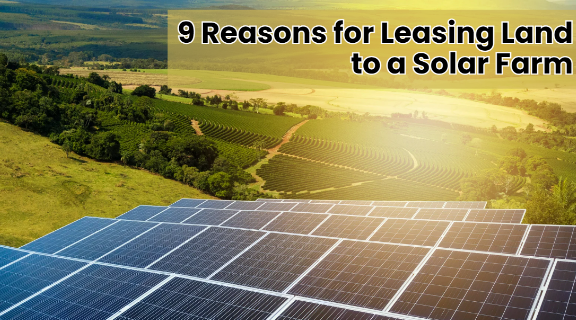
You may have wondered how you can contribute to a greener tomorrow while ensuring a steady income from your land. Maybe letting your land to a solar farm is the realistic middle road between green responsibility and financial stability. With the world fast turning toward renewable energy, how might this choice offer both personal and community benefits?
Contents
Steady Income Stream
One of the most attractive reasons for leasing land to solar companies to do solar farming is that it can provide a steady and reliable source of income. Generally, this leasing provides constant rental payments to the owner, which may prove to be a great financial benefit.
In comparison with traditional uses of land, probably having fluctuating income or uncertainties in the market, solar leases offer predictable revenues paid yearly or half-yearly. This steady income will become very valuable for farmers, rural landowners, and all those who need a stable financial return.
Minimal Land Use Disruption
The act of letting out your land for solar energy or renting land for solar farm typically involves minimal disruption of the land itself. That is because the solar panels are mounted on top of the land and thus require no substantial excavation or alteration.
Often, the underlying land is left in its natural state or used for other purposes alongside the solar panels. For instance, sometimes the areas could be grazed by farm animals or continued farming while running parallel with the generation of clean energy through solar panels. This way, landowners can keep their land productive while knowing how to lease land for solar farm.
Environmental Benefits
Leasing land to a solar farm supports GHG reduction through the integration of renewable energy sources. This is a completely clean and highly sustainable energy production solution, as it reduces dependence on fossil fuels and minimizes environmental pollution.
By leasing out their lands for the establishment of solar projects, landowners make a very small contribution toward fighting climate change and being good caretakers of the environment. This positive environmental impact can further raise the reputation of the landowner as a responsible and forward-thinking land manager.
Land Value Increase
A solar farm has the potential to increase land value. Solar energy projects often involve long-term leases and substantial investments that may enhance the perceived value of the land. Further, solar land lease companies can also appeal to future buyers or investors who are targeting sites to host renewable energy projects.
Thus, it increases the land value and marketability. If a landowner might look toward selling his property shortly, having a solar farm on my land can become part of the selling pitch that increases the value for the owner.
Tax Incentives and Benefits
Landowners who rent their property for solar farming can also benefit from added tax advantages and financial incentives. Many jurisdictions offer some sort of tax credits, deductions, or incentives for renewable energy projects, which further adds to the financial benefit for a landowner.
These benefits may help offset costs associated with land leasing and enhance overall financial returns. It is highly recommended to consult with a tax professional who can help landowners determine what specific tax benefits are available in their area and how to further increase the financial gain of an income stream from the lease of the land to the solar farm.
Support to the Local Economy
Solar farms bring about the creation of jobs and economic activity, thus supporting the local economy. During construction, most solar projects generally require the services of local contractors, construction workers, and other professionals.
This can prove to be a source of stimulus for the labor market in the locality and, at the same time, support for the local economy. In addition, solar farms can mean increased spend in the community due to workers and people associated with the project going out to spend money for goods and services.
Landowners, by leasing their land to a solar farm, are promoting economic development in their region and creating jobs.
Long-Term Land Management
Most solar farms are on a long-term lease, normally 20 to 30 years or even much longer. This very long-term commitment can provide the landowner with greater personal financial stability and a protected long-term income stream.
Additionally, maintenance and ongoing management requirements are generally minimal compared to most other land uses. This would enable the owner to deal with other aspects of the property while enjoying a secure source of income.
Technological Advancements and Innovation
The solar energy industry is constantly changing, with technology advancing to facilitate the efficiency and effectiveness of solar panels. By leasing acres to a solar farm, landowners can position themselves to benefit from innovations in the area of solar technology.
Today’s solar panels are the most efficient and rugged developed to date, which means that landowners can experience leading-edge technology optimized for energy production and revenues. Keeping up with technological changes allows landowners to be part of a growing, progressive industry.
Community and Social Impact
It is often asked why do solar companies lease land instead of buying but leasing out a solar farm can have several local and social benefits to society in general. Solar farms provide clean energy that can be used to power homes, businesses, and other infrastructure, contributing to the well-being of their communities.
Community Impact of Leasing Land to a Solar Farm
| Aspect | Description | Benefit |
| Clean Energy Contribution | Solar farms provide a source of renewable energy that reduces reliance on fossil fuels. | Helps decrease local and global greenhouse gas emissions, contributing to cleaner air. |
| Economic Development | Solar projects create local jobs during the construction and maintenance phases. | Stimulates the local economy and provides employment opportunities. |
| Support for Sustainability Goals | Solar farms align with community goals for environmental responsibility and sustainability. | Enhances community reputation and promotes a culture of environmental stewardship. |
Conclusion
Leasing farmland to a solar farm holds several benefits for the landowner: financial stability, environmental impact, increased value of the land, and community support. In joining the revolution of solar energy, a landowner will benefit from stable income generation with little disruption to land use and the satisfaction derived from contributing to a cleaner and more sustainable future.
With the ever-growing interest in renewable energy, leasing land to a solar farm represents involvement in change with tangible benefits.
FAQs
- What are the primary financial benefits of leasing land to a solar farm?
Leasing land to a solar farm provides a steady and reliable income stream, often paid annually or semi-annually.
- How does leasing land for solar energy impact the land itself?
Solar farms typically involve minimal land disruption, allowing the land to remain largely unchanged or be used for other purposes alongside the solar panels.
- What are the environmental benefits of leasing land to a solar farm?
Solar farms reduce greenhouse gas emissions and support the shift to renewable energy, contributing to a cleaner environment.
